
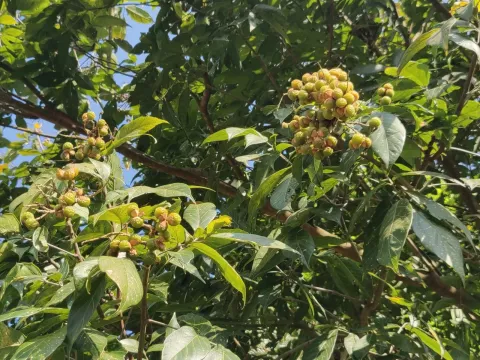
Sapindus trifoliatus
Sapindus trifoliatus
Sapindus trifoliatus is a species of evergreen tree in the Sapindaceae family. Native to tropical regions of India and Southeast Asia, it is widely recognized for its fruit, which contains natural surfactants known as saponins.
What the section contains
Sapindus trifoliatus
The tree thrives in tropical climates and is sensitive to frost. It requires a consistently warm environment to reach its full growth potential, making it suitable only for specific frost-free geographic zones.
It prefers well-drained, fertile loamy soils. Proper drainage is essential as the tree's root system is vulnerable to waterlogging, which can cause root rot and significantly hinder plant development.
Full sun exposure is a critical requirement for Sapindus trifoliatus. Trees grown in shaded areas tend to produce fewer fruits and exhibit slower growth rates compared to those in open, sunlit locations.
Agricultural management includes regular soil moisture monitoring and periodic weeding around the root zone. Young trees require supplemental irrigation during the initial establishment phase until they develop deep root systems.
The primary economic product of Sapindus trifoliatus is its fruit. The pericarp (shell) of the fruit is extremely rich in saponins, which act as a natural, biodegradable detergent when mixed with water.
Yield capacity improves with tree maturity and proper pruning practices. Managed orchards prioritize the health of the canopy to ensure uniform fruit maturation across the tree branches.
Beyond its use in hygiene products, the fruit has traditional medical applications. It is utilized in various formulations for skin conditions and as an expectorant, reflecting its long history in ethnobotanical practices.
The cosmetic and laundry industries are the main consumers of the fruit, utilizing it for the production of eco-friendly soaps, shampoos, and cleaning agents that are safe for human use and the environment.
Sustainability in production is a key driver for the crop, as consumers increasingly seek natural alternatives to synthetic surfactants in their daily care products.
Harvesting takes place when the fruits reach full maturity, indicated by a dark, leathery appearance. At this stage, the saponin content is at its peak, ensuring maximum efficacy for end-use products.
Manual harvesting is standard, as mechanical methods may damage the tree structure. Care is taken to collect only ripe fruits to maintain the quality of the raw material batch.
Post-harvest processing involves cleaning the fruits and drying them under controlled conditions. Proper dehydration is vital to prevent fungal growth during storage and transport.
Stored fruits must be kept in dry, well-ventilated conditions. Exposure to moisture during storage can lead to the degradation of active saponins and promote the development of mold, rendering the crop useless.
Effective post-harvest logistics focus on maintaining the integrity of the soap nuts to ensure they remain suitable for downstream processing in the cosmetic and cleaning industries.
Like many tropical species, Sapindus trifoliatus can be affected by various insect pests, including aphids and scales that feed on tender leaves, weakening the overall plant vitality.
Fungal diseases are a significant risk, particularly during periods of high humidity and poor air circulation within the orchard. These infections can cause foliage spots and limb dieback.
Integrated Pest Management (IPM) practices are highly recommended. These include pruning to improve canopy airflow, which helps to keep foliage dry and less hospitable to fungal spore germination.
Biological control agents are often used in preference to chemical pesticides to maintain the organic status of the crop, which is highly valued by consumers of natural cleaning products.
Regular surveillance and early detection of pest outbreaks are essential to preventing major economic losses and ensuring the long-term productivity of the orchard.