
Schleichera
Schleichera
Schleichera (Schleichera oleosa) is a prominent tropical tree species belonging to the Sapindaceae family. Native to the Indian subcontinent and Southeast Asia, it is well-adapted to tropical dry deciduous forests.
What the section contains

Schleichera
The tree thrives in fertile, well-drained loamy soils. It exhibits high drought tolerance once established, making it a suitable candidate for reforesting arid tropical regions where other crops might fail.
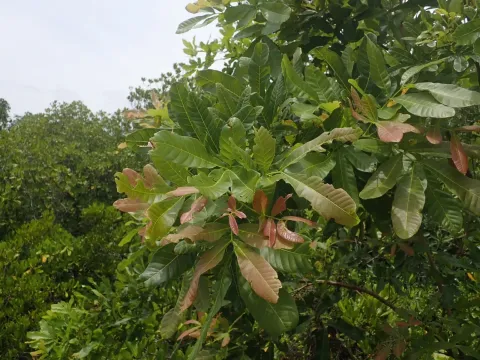
Botanically, it features a sturdy, upright trunk and a spreading canopy. The leaves are pinnate, often displaying a reddish flush when young, which is a characteristic feature of the species during the spring growth cycle.
Cultivation requires minimal intervention once the trees reach maturity. However, young saplings need protection from weeds and competing vegetation, as they exhibit a relatively slow initial growth rate.
Regarding climate, Schleichera prefers regions with a clear distinction between wet and dry seasons. This climatic rhythm is essential for the accumulation of chemical compounds in the seeds and for the life cycle of lac-producing insects.
The primary economic output of Schleichera is the production of lac, a resinous secretion produced by the scale insect Laccifer lacca. This resin is the raw material for shellac, used globally in wood finishing and food coatings.
Seeds are a valuable secondary product, yielding Kusum oil. This oil is extensively utilized in the soap industry, as a lubricant, and in traditional medicinal formulations for topical skin treatments.
The edible fruits of the Schleichera tree provide a supplemental food source for local communities. They are rich in nutrients and are appreciated for their tart, refreshing flavor profile.
The timber obtained from Schleichera is renowned for its exceptional density and strength. It is frequently employed in the manufacture of heavy-duty agricultural tools and construction elements.
In agroforestry systems, the tree serves as an effective soil stabilizer. Its deep taproot system prevents erosion on slopes, while its dense foliage contributes to organic matter buildup when leaves fall.
The trees can be susceptible to fungal infections of the bark, particularly in humid conditions or where branches have been damaged during lac harvesting. Proper sanitation of cutting tools is vital.
Defoliating insects may cause periodic issues for saplings. Integrated pest management strategies, focusing on biological control, are preferred to maintain the health of the canopy without chemical impact.
Root rot is a major threat in poorly drained soils. Farmers must ensure that planting sites have adequate natural drainage to prevent the stagnation of water, which is fatal to young Schleichera trees.
Wildlife, particularly monkeys and rodents, often target the fruit and tender branches. Protection measures such as fencing or strategic planting may be required in areas with high wildlife density.
Improper harvesting techniques of the lac resin can cause physical stress to the tree. Sustainable harvesting practices are essential to ensure the longevity and continuous productivity of the host tree.