
Semenov's Maple
Acer semenovii
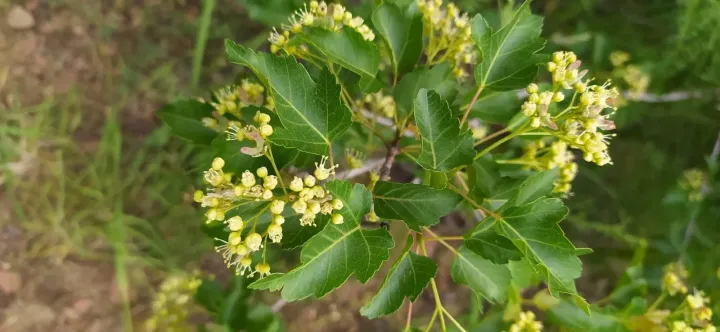
Description
Sowing dates
Propagation of Semenov's maple in industrial settings is most often carried out by seeds. Sowing is conducted in autumn or spring after prior stratification at low positive temperatures, which is necessary to increase germination energy.
In nursery conditions, autumn sowing is preferred, as natural winter stratification contributes to better embryo development. Seeds are sown into prepared furrows to a depth of 2–3 cm, followed by mulching to retain soil moisture.
For spring sowing, seeds require preparation for 60–90 days in damp sand or substrate. The optimal seeding density is calculated based on the intended use of the saplings, usually leaving 20–30 cm between plants in a row.
Young seedlings require regular watering in the first year, as their root system is not yet developed enough to search for moisture in deep soil horizons.
Thinning of seedlings is carried out after the appearance of the first pair of true leaves, leaving the strongest specimens for further growth in the nursery school section.
Growing requirements
Semenov's maple is a typical representative of Central Asian flora, possessing high ecological plasticity. It is a drought-tolerant and frost-resistant tree capable of growing in a sharply continental climate.
The plant prefers well-drained rocky or sandy loam soils typical of mountain slopes. It successfully tolerates alkaline soils and does not require high humus content, making it promising for afforestation of degraded areas.
Optimal light conditions for this species are full sun or light shade. In conditions of high humidity and lack of drainage, the tree is prone to root rot, so the choice of planting site plays a decisive role in crop development.
The crop is an important component of mountain forests, performing soil-protecting and erosion-control functions. Due to its developed root system, the maple is able to hold soil on steep slopes, preventing landslides.
In regions with cold winters, young plantings need protection from drying winds, but as it matures, the tree gains exceptional resistance to unfavorable atmospheric factors.
Yield
The economic use of Semenov's maple does not involve agricultural production in the classic sense, but the tree is highly valuable as a phytomeliorative crop.
Maple wood is characterized by a dense structure, hardness, and beautiful texture, making it suitable for carpentry, the manufacture of souvenirs, and small-scale furniture components.
The species is a valuable honey plant, providing bees with an early spring forage. This allows for the effective use of maple stands within apiary areas to support ecosystem biodiversity.
For landscaping purposes, the crop is valued for its compact crown and decorative foliage, which allows it to be used in urban landscapes and protective shelterbelts.
The estimated biomass yield depends on growing conditions: on rich soils, wood growth is more active, allowing for sanitary logging and the use of the resource for agricultural needs.
Main diseases and pests
The main biological threats to Semenov's maple are fungal infections, such as powdery mildew, which affects leaves during periods of high humidity and lack of crown ventilation.
Among pests, the greatest danger is posed by leaf-eating insects, in particular, weevils and the maple mealybug, capable of reducing photosynthesis rates and weakening the tree.
In nurseries, young plants may suffer from sap-sucking pests, such as aphids, which requires the use of systemic insecticides at early stages of crop development.
Disease prevention is based on compliance with agrotechnical standards, such as timely sanitary pruning of diseased shoots and maintaining optimal planting density to ensure air circulation.
Bark damage by wild animals in mountain regions is also a serious risk factor, requiring the installation of mechanical fences to protect valuable young stands.