
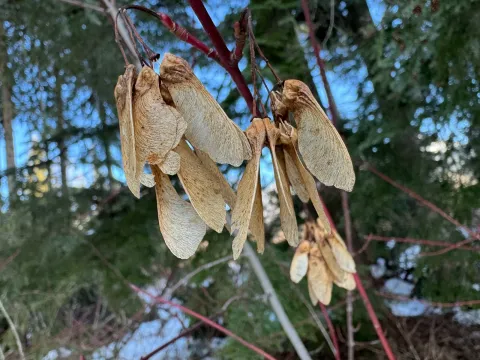
Rocky Mountain maple
Acer glabrum
Rocky Mountain maple (Acer glabrum) is a member of the Sapindaceae family. It is a resilient deciduous shrub or small tree native to the western regions of North America, commonly found in mountainous terrains and along stream banks.
What the section contains
Rocky Mountain maple
The plant thrives in well-drained, nutrient-rich soils. While it exhibits tolerance to varied soil compositions, it performs best in slightly acidic to neutral substrates. Its cold hardiness makes it an ideal choice for landscaping in regions with harsh winters and fluctuating seasonal temperatures.
Botanically, this species is defined by its smooth, hairless twigs, which give it its specific epithet glabrum. The foliage is typically lobed, providing a vibrant aesthetic during the autumn months when the leaves turn shades of yellow, orange, or red.
In terms of хозяйственного (utilitarian) use, it serves primarily as an ornamental plant for landscaping, erosion control, and wildlife habitat restoration. Its relatively compact size allows for versatile placement in residential gardens as well as large-scale public park projects.
Cultivation practices involve proper spacing during planting to allow for sufficient air circulation. Regular pruning is recommended to maintain the desired canopy structure, while deep irrigation during the establishment phase ensures strong root system development.
The main disease threats to Acer glabrum include powdery mildew and various leaf spot diseases, which typically develop in conditions of high humidity and poor ventilation. Pruning dense branches can effectively mitigate the risk of fungal proliferation.
Pests such as aphids and leaf-eating caterpillars are commonly encountered. Integrated pest management, including the use of biological controls or targeted application of organic pesticides, is highly recommended to preserve the plant's visual health.
Verticillium wilt remains a critical issue for most maple species. Preventive measures include ensuring proper drainage and avoiding mechanical damage to the root system, which serves as an entry point for soil-borne pathogens.
Scale insects can infest stems and branches, leading to a general decline in vigor. Monitoring the bark for signs of infestation and cleaning affected areas with appropriate oil-based sprays can help manage the population of these pests.
Abiotic stress, such as prolonged drought or extreme heat, can predispose the tree to secondary infections. Maintaining a consistent moisture level through mulching and supplemental watering is essential for long-term tree stability and resistance to threats.