
Longan
Dimocarpus longan Lour.
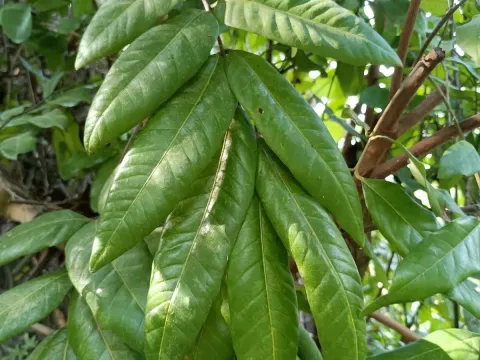
Longan (Dimocarpus longan Lour.) is a broadleaf evergreen tree belonging to the Soapberry family (Sapindaceae). It grows naturally in tropical regions, forming a dense canopy with leathery pinnate leaves, reaching heights of up to 12 meters.
What the section contains
Longan
The culture thrives in tropical and subtropical climates where temperatures range from +22 to +30 degrees Celsius. While it can withstand short periods of light frost, temperatures below -2 degrees Celsius can cause significant damage to the plant's vascular system and canopy.
For optimal growth, longan requires deep, nutrient-rich loam or sandy-loam soils with excellent drainage. The species is highly sensitive to waterlogged conditions, making well-drained sites essential for successful commercial plantations.
Water management is critical during the fruit development stage, though irrigation needs to be adjusted during the flowering period to prevent premature drop. Regular applications of organic fertilizers and NPK mixtures are necessary to sustain long-term tree vigor and fruit quality.
Longan is native to South and Southeast Asia, with major cultivation hubs in China, Thailand, and Vietnam, where the climate provides the necessary warmth and rainfall patterns for the tree to complete its annual reproductive cycle.
Yield capacity depends on the cultivar, rootstock, and specific management practices. Mature trees in peak health typically produce between 150 and 300 kilograms of fruit per season, depending on the environmental conditions during the flowering phase.
The fruits develop in large, grape-like clusters. Each individual fruit is a round drupe with a thin but leathery brown pericarp covering a translucent, juicy, sweet pulp and a single dark seed.
Trees propagated from seeds take approximately 6 to 8 years to begin bearing fruit, whereas trees established via air-layering or grafting can yield the first harvest as early as the third or fourth year after planting.
Longan production often exhibits an alternate bearing pattern, where high-yield years are followed by periods of low production. Professional growers utilize canopy thinning and pruning to stabilize yields across consecutive seasons.
The commercial use of longan includes fresh consumption, canning, and drying. Dried longan, in particular, is highly prized in traditional medicine and culinary markets for its unique flavor and health properties.
The primary threats to longan orchards are fungal diseases like anthracnose and powdery mildew, which flourish under high humidity levels and poor airflow within the tree canopy, leading to fruit and foliage damage.
Pests such as scale insects, mites, and various fruit flies pose significant risks to productivity. Infestations can result in poor fruit appearance, leaf deformation, and reduced overall plant health if left unmanaged.
Integrated pest management (IPM) strategies, including biological control agents and scheduled fungicide applications, are vital for maintaining orchard health while minimizing environmental impact and pesticide residues.
Routine canopy maintenance through pruning is essential for disease prevention, as it ensures adequate sunlight penetration and improved ventilation, which keeps the foliage dry and suppresses fungal growth.
Continuous monitoring of the orchard is necessary to identify early signs of pathogen outbreaks. Early detection allows for targeted interventions that prevent the spread of diseases across the plantation.
Harvesting longan is a manual process requiring extreme care to avoid damaging the fruit's fragile skin. Workers harvest the entire fruit clusters using shears to ensure the fruit remains attached to its stem.
Determining maturity is based on the change in skin color and the sugar content within the aril. Unlike some fruits, longan does not ripen post-harvest, making it imperative to harvest only fully mature clusters.
Post-harvest management involves rapid cooling to remove field heat, which extends the shelf life of the fruit. Proper ventilation is required during transit to maintain quality and prevent moisture buildup.
For international trade and longer storage, fruit is often processed through controlled drying or quick-freezing. These methods allow growers to preserve the high nutritional value of the fruit for year-round distribution.
Logistical efficiency is key in longan farming, as the fruit is highly perishable. Utilizing specialized containers and refrigerated transport ensures that the product reaches the market in prime condition.