
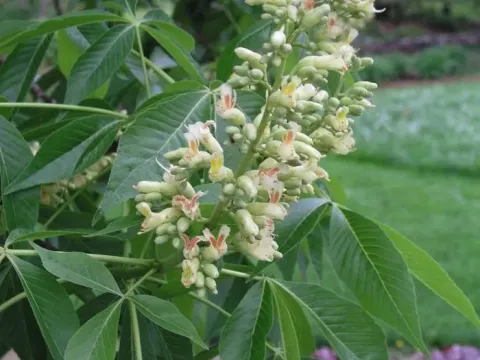
Arnold horse chestnut
Aesculus arnoldiana
The Arnold horse chestnut (Aesculus × arnoldiana) is a distinct hybrid belonging to the Sapindaceae family. This tree is valued for its unique combination of leaf structure and floral display, making it a staple in ornamental forestry and landscape architecture.
What the section contains
Arnold horse chestnut
It thrives in deep, fertile, and well-drained soils. While it can adapt to various soil types, loamy soils that retain moisture without becoming waterlogged are ideal. Proper drainage is crucial to prevent root rot in young specimens.
The tree prefers a full sun location, although it can tolerate partial shade in warmer climates. It is relatively cold-hardy, but young trees should be protected from harsh, drying winds during the winter months to ensure survival and uniform growth.
Cultural management includes regular watering during the first three to five years post-planting. Fertilization with a balanced slow-release fertilizer in early spring supports vigorous growth and enhances the density of the canopy.
In terms of usage, the Arnold horse chestnut is primarily utilized in urban planning, public parks, and large private estates. Its stature and shade-providing capabilities make it a preferred choice for large-scale landscaping projects.
The most significant threat to this species is the leaf miner moth, which causes foliage to turn brown and drop prematurely. Regular monitoring and, if necessary, the use of biological control agents are recommended to mitigate damage.
Fungal leaf spot diseases are common, especially in humid and stagnant air conditions. Improving air circulation within the canopy through proper thinning and pruning is an essential cultural practice to reduce fungal pressure.
Scale insects can infest branches, leading to a general decline in tree vigor. Inspecting the undersides of leaves and twigs for signs of infestation is vital during the growing season to catch problems early.
Canker diseases can occasionally affect the trunk and main branches. These infections usually enter through wounds, emphasizing the importance of preventing mechanical damage during mowing or landscaping operations.
To ensure tree longevity, practitioners should focus on holistic care. Proper nutrition, adequate watering, and prompt attention to minor pest sightings are the most effective ways to maintain the health of these trees.