
Matai
Prumnopitys taxifolia
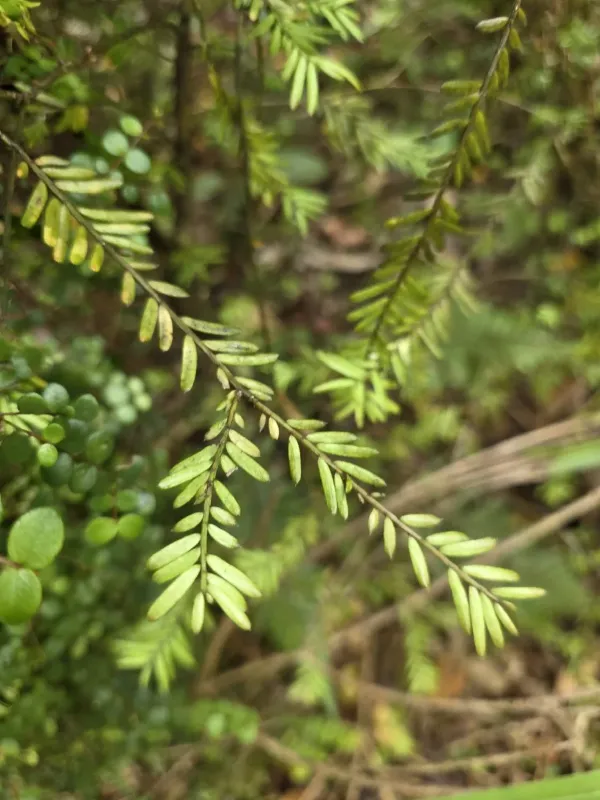
Description
Growing requirements
Prumnopitys taxifolia, commonly known as Matai, is a long-lived coniferous tree belonging to the Podocarpaceae family. It is native to New Zealand, where it forms a significant component of lowland podocarp forests.
The species thrives in mild, humid climates. It requires consistent rainfall and protection from extreme temperatures, as it is not frost-tolerant in its juvenile stages. It is best suited for sheltered areas with moderate temperatures throughout the year.
Soil requirements for Matai include deep, well-draining, and nutrient-rich substrates. It is particularly successful in alluvial soils where organic matter content is high, ensuring sufficient moisture retention without the risk of waterlogging.
The tree exhibits distinct heterophylly; the juvenile form features thin, interlacing, brownish twigs that contrast sharply with the erect and dense crown of mature trees. The adult leaves are linear, rigid, and resemble those of the Yew tree.
Economically, Matai wood is highly valued for its exceptional strength, hardness, and durability. Historically, it was a preferred timber for furniture and construction, though today it is primarily managed for conservation and landscape restoration.
Main diseases and pests
The most significant threat to wild populations and young plantings is browsing by invasive mammals, particularly deer and possums. These animals consume tender shoots and bark, preventing the natural regeneration of the forest floor.
Root rot caused by fungal pathogens is a concern in areas with inadequate soil drainage. Excessive moisture creates an environment conducive to root-borne diseases, which can lead to the slow decline and eventual death of the tree.
Insect pests, such as scale insects and leaf-hoppers, can infest the foliage and branches. While mature trees are generally resilient, heavy infestations on younger specimens can cause stunted growth and significant aesthetic damage to the needles.
Environmental stress, such as prolonged drought or extreme heatwaves, can make the tree susceptible to secondary opportunistic infections, such as cankers and wood-decay fungi, which compromise the tree's structural integrity.
Effective management includes implementing physical barriers against herbivores, maintaining optimal soil health through proper drainage, and conducting regular health assessments to identify and treat early signs of pest or disease outbreaks.