
Lubarsky Larch
Larix lubarskii
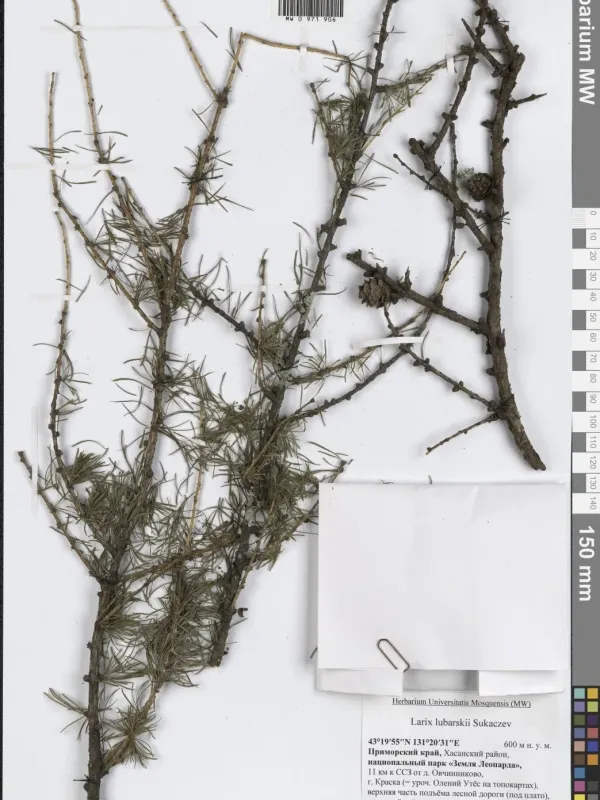
Description
Growing requirements
Lubarsky Larch (Larix lubarskii) belongs to the Pinaceae family and is a resilient coniferous species known for its ability to thrive in challenging temperate and cold climates.
This tree species is highly photophilous, requiring full sunlight exposure to maintain robust growth rates and the structural integrity of its characteristic conical crown.
It performs best in well-drained, nutrient-rich soils with a neutral or slightly acidic pH, avoiding stagnant water environments that can lead to root system decay.
Silvicultural management of this species involves careful thinning to ensure that individual trees have enough space to develop their root systems and maximize timber quality.
In terms of economic utility, the timber is prized for its high resin content, extreme durability, and resistance to water-induced degradation, making it highly valued in structural construction.
Main diseases and pests
Common pathological threats include larch needle cast and other fungal infections, which are more prevalent in areas with high humidity and poor air circulation within the canopy.
Pest management focuses on controlling larch case-bearers and needle-eating larvae, which can significantly stunt the growth of young saplings during the spring vegetation period.
Bark beetles pose a severe threat to mature trees, particularly those weakened by drought or mechanical stress, necessitating strict sanitary monitoring and debris removal.
The implementation of prophylactic spraying in nurseries helps mitigate the risks associated with fungal pathogens during the most vulnerable early growth stages of the plant.
Overall, maintaining the ecological health of Larix lubarskii stands requires balanced forest management practices that emphasize hygiene and timely detection of infestations.