
Griffith's Larch
Larix griffithii
Description
Growing requirements
Griffith's Larch (Larix griffithii) belongs to the Pinaceae family and is a distinctive conifer native to the eastern Himalayas. It typically thrives in high-altitude environments, ranging from 2,800 to 3,700 meters above sea level. This species is highly adapted to the cool and misty climate of its natural alpine habitat.
For successful cultivation, this larch requires a cool, temperate climate with consistent rainfall throughout the growing season. It is notoriously intolerant of heat and drought, which makes it challenging to grow in lowland areas with hot, dry summers. Protection from intense afternoon sun and desiccating winds is essential for the survival of young specimens.
The soil requirements for Larix griffithii include deep, fertile, and well-drained loams. It prefers a slightly acidic to neutral pH level. The root system is sensitive to waterlogging, so soil aeration is a critical factor in site selection. Poorly drained heavy soils can lead to root rot and stunted growth, effectively limiting the species' agricultural potential.
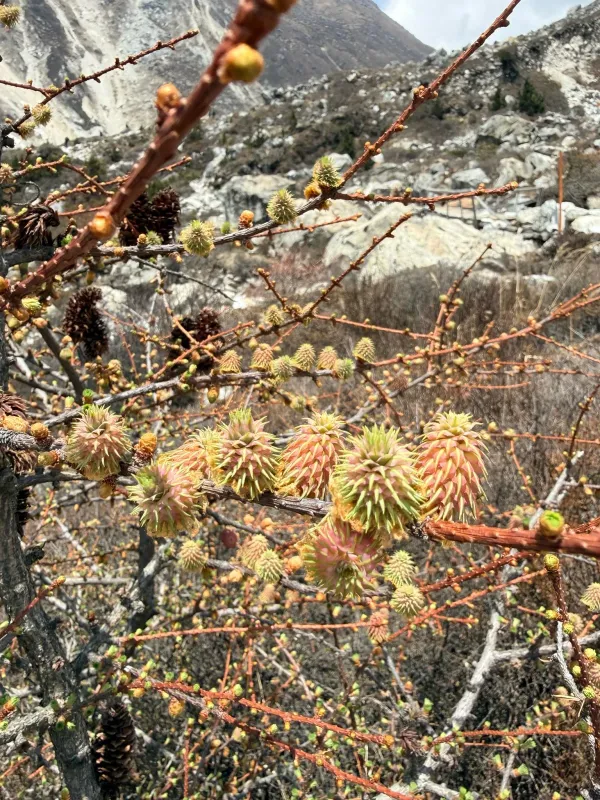
Botanically, this larch is easily identified by its long, pendulous branches and large cones with reflexed scales. It is a deciduous conifer, meaning it sheds its needles annually after they turn a vibrant gold in the autumn. Mature trees can reach heights of up to 20 meters, maintaining an elegant, narrow habit.
In terms of хозяйственного usage, Griffith's Larch is highly valued in specialized arboretums and decorative forestry. Beyond its ornamental appeal, it serves as an excellent species for soil stabilization in mountainous regions. Its root structure provides significant reinforcement against erosion, making it a critical asset in ecological restoration projects.
Main diseases and pests
Larix griffithii is primarily susceptible to fungal diseases such as needle cast, especially when planted in areas with high humidity and stagnant air. These conditions encourage the proliferation of spores that cause premature needle drop, which significantly weakens the tree's health. Improving airflow through appropriate spacing is the most effective cultural control.
Insect pests, including various aphids and sawflies, pose a constant threat to the young, tender foliage of the larch. Severe infestations can result in stunted shoot growth and a weakened appearance. Integrated pest management practices, including the use of neem oil or targeted insecticidal soaps, are recommended when population thresholds are exceeded.
Environmental stress, particularly sudden frost after bud break, can make the tree more susceptible to secondary infections. Damaged tissues serve as entry points for pathogens, leading to branch dieback. Regular monitoring is necessary to identify early signs of stress and to apply restorative fertilization treatments if required.
Bacterial cankers represent a more severe threat, often appearing on the main stem or major branches. Once established, these infections are difficult to control and may necessitate the removal of the affected tree to prevent spread. Proper tool sterilization during pruning is mandatory to maintain the integrity of the grove.
Finally, nutrient deficiencies can manifest as chlorosis, making the tree less resilient to environmental stressors and opportunistic pests. A balanced fertilization program tailored to the specific nutrient profile of the soil is essential to bolster the tree's immune system and ensure vigorous growth throughout its life cycle.