
Lyall's larch
Larix lyallii
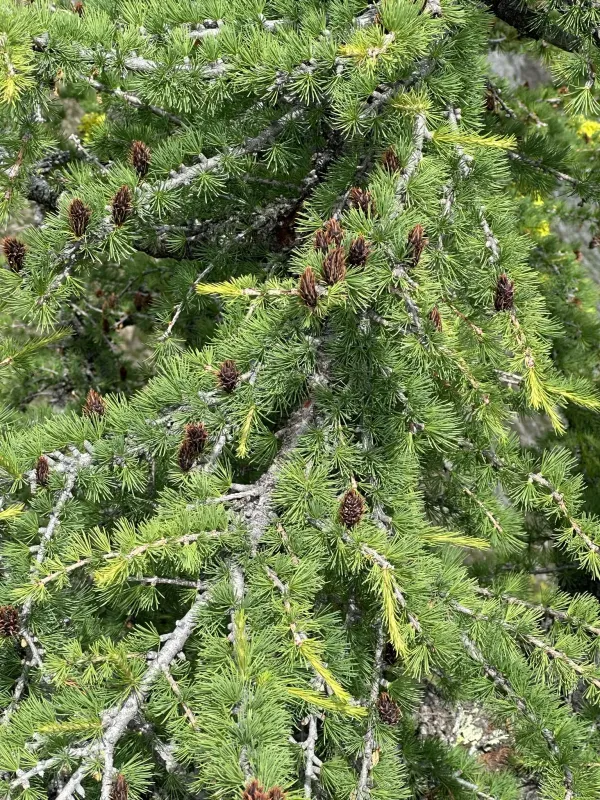
Description
Growing requirements
Lyall's larch is a distinct coniferous tree belonging to the Pinaceae family. It is notably adapted to the harsh, high-altitude environments of the subalpine zone, often growing near the tree line in the Rocky Mountains.
The native range of this species is found in the northwestern United States and southwestern Canada. It thrives in regions where the climate is characterized by short growing seasons and significant snowfall, showing high resilience to cold stress.
Regarding soil requirements, the species demands well-drained, porous substrates. It does not tolerate waterlogged soils, which can induce root rot. Rocky or sandy slopes are considered the ideal habitat for its development.
Botanically, this larch is a deciduous conifer, shedding its needles annually. It is a slow-growing tree that exhibits a stunted, sturdy form when exposed to intense alpine winds, which is a key survival strategy in its natural habitat.
In terms of economic and practical use, Lyall's larch is primarily of value in botanical research, alpine landscape conservation, and specialized horticulture for high-elevation gardening projects where hardiness is essential.
Main diseases and pests
Lyall's larch is generally resistant to many pathogens due to the natural isolation of its alpine habitat; however, it remains vulnerable when introduced to lower, warmer, or more humid environments.
Fungal pathogens such as needle cast can affect the trees if planting sites lack sufficient air circulation or if humidity levels remain consistently high during the growing season.
Insect pests, including various species of sawflies, are known to feed on the foliage. While mature trees can withstand minor infestations, young specimens may suffer from significant defoliation.
Mechanical damage from severe winter weather, such as heavy snow load or ice, can cause branch breakage. Proper site selection is vital to minimize these abiotic threats to the tree's architecture.
Integrated pest management strategies focusing on monitoring and early intervention are recommended to maintain the health of these trees in non-native or controlled growing environments.