
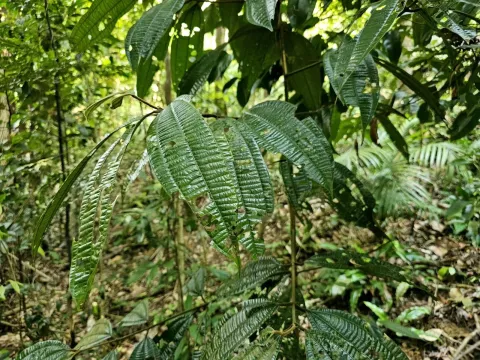
Javan cinnamon
Cinnamomum javanicum
Javan cinnamon (Cinnamomum javanicum) is a perennial evergreen tree belonging to the Lauraceae family. It is native to the tropical regions of Southeast Asia, where it thrives in dense, humid forest environments.
What the section contains
Javan cinnamon
The plant requires a tropical climate characterized by consistently high temperatures and significant annual rainfall. It is sensitive to extreme cold and requires sheltered locations to prevent damage from strong or desiccating winds.
Soil requirements for Cinnamomum javanicum include well-draining, fertile loams with high organic matter content. The plant cannot tolerate waterlogged soils, as poor drainage leads to rapid root decay and stunted growth.
Cultivation practices involve proper spacing to allow for adequate air circulation and access to light. Young plants often benefit from partial shade provided by taller canopy trees to mimic their natural habitat.
The primary economic use of this species is the harvesting of its aromatic bark for spice production. Additionally, the plant serves as a source of essential oils used in culinary, cosmetic, and medicinal applications.
The main threats to the health of the plantation include fungal pathogens that attack the root system. These infections are usually triggered by excessive irrigation or lack of proper soil aeration during the rainy season.
Insect pests such as wood-borers and scale insects can significantly impact the quality of the bark and overall tree vigor. Regular monitoring and the application of integrated pest management practices are essential to ensure a healthy harvest.