
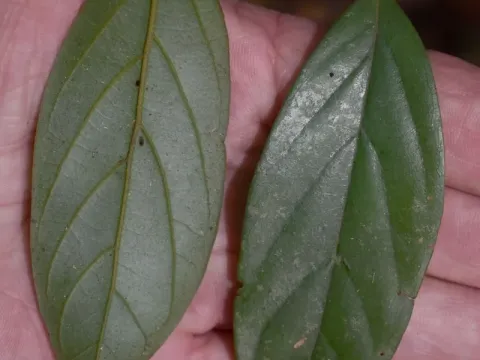
Endiandra wolfei
Endiandra wolfei
Endiandra wolfei is a member of the Lauraceae family, native to the tropical rainforests of Queensland, Australia, and is not cultivated as a commercial crop.
What the section contains
Endiandra wolfei
Propagation in controlled environments is challenging, as seeds must be sown fresh; they lose viability rapidly if not placed in moist, organic-rich soil.
Seeds require a consistent temperature and high humidity to break dormancy, simulating the deep shade and soil moisture conditions of their native habitat.
A well-draining yet moisture-retentive substrate is essential for seed germination, preventing the rot that commonly affects larger tropical seeds.
Seedlings are extremely slow-growing and require minimal light interference during the first developmental stages to ensure healthy root establishment.
This species thrives in high-humidity tropical climates with stable temperatures, ideally ranging between 22°C and 28°C throughout the growing cycle.
Soil requirements include high organic content, slight acidity, and excellent drainage to mimic the leaf litter layers of an Australian rainforest.
Constant moisture is crucial for metabolic activity, but waterlogging must be strictly avoided to prevent root and crown diseases typical of the Lauraceae family.
Endiandra wolfei prefers filtered, indirect light, as it is naturally adapted to develop under the dense canopy of tropical forests.
Nutrient management involves providing balanced, slow-release fertilizers to avoid chemical burn, which the sensitive root system of this species often exhibits.
There is no commercial yield associated with Endiandra wolfei, as it is a rare and ecologically protected plant with significant conservation value.
Yield, in an experimental sense, is measured by the production of viable seeds per tree, which is generally low due to the species' specific ecological niche.
Research focus remains on the phytochemical analysis of its leaves and bark, rather than food or fiber production, given its potential biological properties.
The total biomass production is naturally limited by the slow growth rate typical of many endemic understory trees in the Australian tropical belt.
Conservation efforts currently prioritize habitat restoration over the collection of plant products to ensure the long-term survival of the taxon.
Primary threats include fungal infections, particularly those caused by Phytophthora species, which thrive in the warm, humid conditions required by the plant.
Pests such as mites and scale insects can become a concern if the environmental humidity fluctuates, stressing the plant and reducing its natural resistance.
Habitat loss and fragmentation in Queensland are the most significant threats to the species' long-term viability in its native ecosystem.
Extreme weather events, such as prolonged dry spells or uncharacteristic cold snaps, can cause severe physiological damage to the foliage.
Integrated pest management strategies focusing on biological controls are recommended to maintain the health of these sensitive botanical specimens.
Harvesting for scientific study is performed entirely by hand, with extreme care to avoid damaging the tree's delicate branches and canopy structure.
Seed collection is timed precisely to the maturation of the fruit, requiring frequent monitoring during the reproductive phase of the growing season.
Post-harvest handling involves the immediate cleaning of seeds to prevent moisture-related decay, followed by storage in specialized controlled containers.
Scientific documentation of each harvested sample is mandatory to maintain data integrity regarding the species' phenotypic and genetic traits.
Materials intended for biochemical research are flash-frozen or desiccated under strictly controlled conditions to preserve the integrity of secondary metabolites.