
Japanese cinnamon
Cinnamomum yabunikkei
Description
Growing requirements
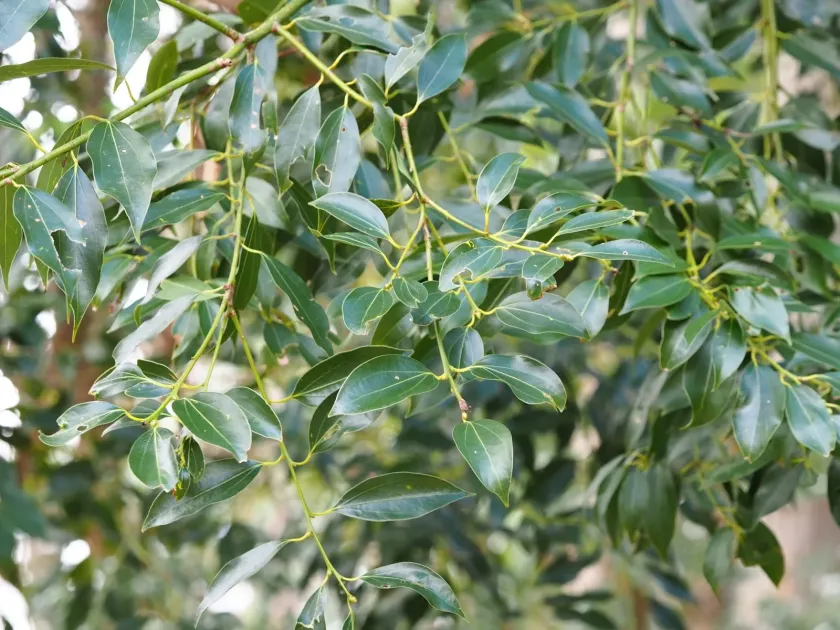
Japanese cinnamon is an evergreen tree belonging to the Lauraceae family, naturally distributed across the temperate and subtropical regions of East Asia. The plant is botanically recognized by its thick, glossy leaves and persistent foliage that remains green throughout the year.
The crop thrives in temperate to subtropical climatic conditions, preferring environments with high humidity and protection from severe frost. While it is hardier than many tropical cinnamon species, it still requires sheltered locations to ensure healthy development.
Soil requirements involve well-drained, fertile substrates that are rich in organic matter. Drainage is critical for this species, as stagnant water in the rhizosphere can quickly lead to root decay and overall plant decline.
Regarding light, the plant prefers partial to full sun exposure, although young specimens benefit significantly from shade cloth protection. Consistent irrigation is required during the primary growing season, though the soil should never become waterlogged.
Economically, the species is utilized for its aromatic properties in the fragrance industry and its potential use in traditional plant-based applications. It is also a popular choice for landscape architecture in temperate Asian zones.
Main diseases and pests
The most common biological threats to Cinnamomum yabunikkei include fungal root rot pathogens, which are primarily facilitated by overwatering and poor drainage management.
Pests such as scale insects and spider mites are frequently observed on the leaves, especially when the plant is kept in low-ventilation greenhouse conditions.
Managing the plant health involves maintaining a clean growing environment and implementing strict phytosanitary protocols to prevent the spread of mites.
Environmental stress, such as sudden temperature drops or desiccation, can weaken the plant, making it significantly more susceptible to opportunistic bacterial infections.
Application of systemic fertilizers and biopesticides helps in maintaining the robust health of the tree, ensuring it can withstand various environmental stressors efficiently.