
Indian bay tree
Persea indica
Description
Growing requirements
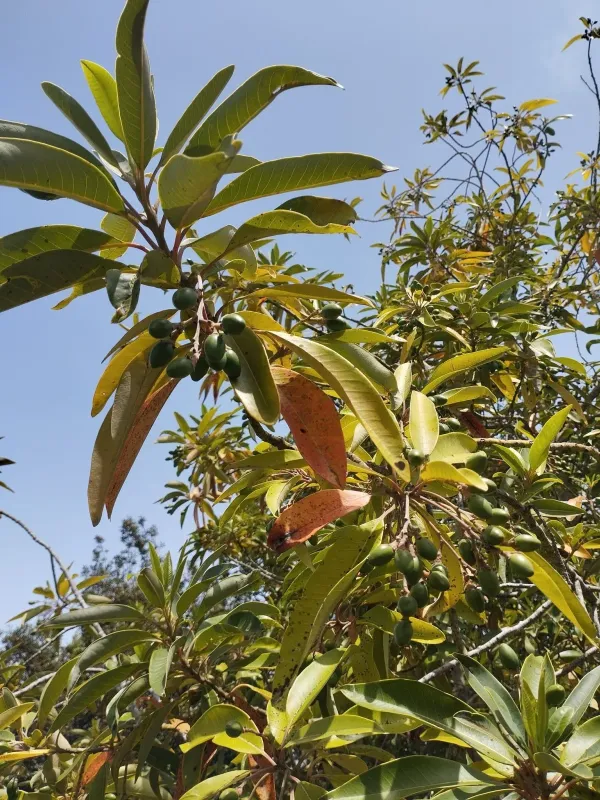
The Indian bay tree (Persea indica) is a significant species belonging to the Lauraceae family. It is an evergreen tree native to the laurel forests (laurisilva) of Macaronesia, known for its dense foliage and high ecological value in its natural habitat.
The plant thrives in humid subtropical climates where temperatures remain moderate throughout the year. It does not tolerate frost and requires a stable, mild environment to reach its full development potential and maintain healthy growth cycles.
Soil requirements for Persea indica are quite specific: it prefers deep, nutrient-rich soils that offer excellent drainage. The plant is highly sensitive to waterlogged conditions, which can quickly lead to root decay, necessitating a well-structured soil profile.
Agrotechnical practices involve protecting the tree from strong winds, as its large leaves can be easily damaged. Proper spacing is essential to ensure adequate airflow around the canopy, which helps in preventing various moisture-related pathologies.
The economic value of this tree is mainly focused on its presence in forest ecosystems. Due to its status as a protected species in many regions, large-scale commercial use of the wood is restricted, making its primary use ornamental and conservation-based.
Main diseases and pests
Root rot caused by Phytophthora species is the most severe biological threat to this crop. This pathogen thrives in saturated soil conditions and can cause the rapid decline of trees that are already stressed by poor site conditions.
Scale insects and mealybugs represent the primary pest challenge for Persea indica. These insects congregate on leaves and stems, sucking essential sap and leaving behind honeydew that fosters the growth of sooty mold, further reducing photosynthetic efficiency.
Environmental stressors such as prolonged drought or extreme soil compaction can weaken the tree's natural defenses, making it more susceptible to opportunistic fungal infections. Maintaining soil health is the best prophylactic measure available.
Competition from invasive plant species can significantly stunt the growth of young trees by limiting access to sunlight and soil nutrients. Regular site monitoring and weed control are essential for the survival of younger specimens in natural settings.
Pruning should be performed with care to prevent the entry of pathogens. Ensuring tools are clean and that cuts are made at proper angles helps the tree heal efficiently without becoming a gateway for wood-boring insects or fungi.