
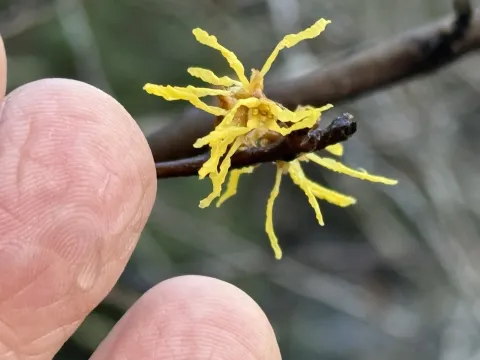
Witch hazel
Hamamelis L.
Witch hazel (Hamamelis L.) is a genus of deciduous shrubs or small trees belonging to the Hamamelidaceae family. Native to North America and East Asia, these plants are highly valued in both ornamental landscaping and the pharmaceutical industry due to their unique properties.
What the section contains

Witch hazel
The culture thrives in fertile, well-drained loamy soils. It prefers a slightly acidic to neutral pH range. Proper site selection is crucial: while the plant is hardy, it requires protection from harsh, desiccating winds and excessive waterlogging in the root zone.
Climatic requirements focus on a temperate environment with distinct seasonal changes. Hamamelis is notably frost-tolerant, but young specimens benefit from mulching to stabilize soil moisture levels and prevent root damage during sharp temperature fluctuations.
Cultivation practices involve minimal pruning, mostly focused on removing dead or crossing branches to maintain tree health. Providing adequate space for root expansion and ensuring sufficient organic matter in the soil are key to long-term plant vigor.
Commercially, Witch hazel is harvested for its bark and leaves, which are rich in tannins and flavonoids. These extracts are widely used in dermatological products, natural astringents, and traditional medicine for their anti-inflammatory effects.
Witch hazel is generally resistant to pests and diseases, but it is not immune to environmental stressors. In high-humidity climates, powdery mildew can develop, particularly on plants crowded in areas with poor airflow and insufficient sunlight.
Insect pests such as aphids and leaf gall midges can occasionally infest the foliage. These pests feed on sap, which can weaken the plant and reduce the quality of harvested leaves, thus necessitating careful monitoring during the growing season.
Integrated pest management (IPM) is the best approach for protecting Witch hazel crops. This includes maintaining plant vitality through balanced fertilization and removing heavily infested plant parts to prevent the spread of localized outbreaks.
Chemical intervention should be considered only as a last resort, using selective pesticides that are safe for the surrounding environment. Biological controls, such as introducing predatory insects, can be highly effective in organic-focused cultivation.
Consistency in horticultural care is the primary defense against pathogens. By ensuring that the plants are not over-watered and receive sufficient nutrients, growers can maintain a healthy, productive crop that is naturally more resistant to common threats.