
Rhodoleia championii
Rhodoleia championii
Description
Growing requirements
Rhodoleia championii is an evergreen tree species belonging to the Hamamelidaceae family. It is native to the subtropical forests of Southern China and Hong Kong.
The plant thrives in warm, humid climates and is sensitive to frost. It requires a stable environment to maintain its evergreen foliage and overall structural integrity.
Cultivation requires well-draining, slightly acidic soil rich in organic matter. Proper soil structure is essential to prevent root rot and ensure adequate nutrient uptake.
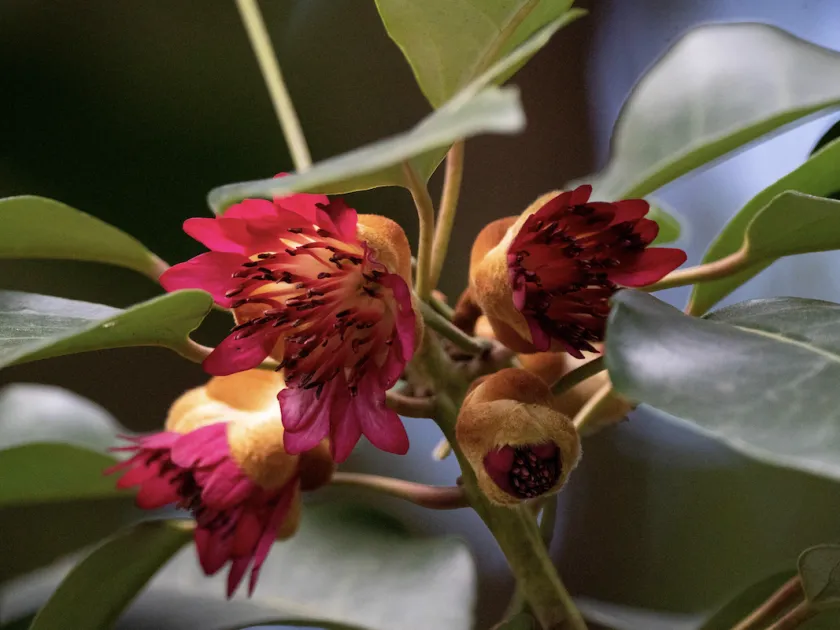
Botanically, the tree is noted for its leathery leaves and striking rose-red flowers. Its growth habit is broad and spreading, making it a focal point in landscapes.
The primary horticultural use of this plant is as a high-value ornamental tree in botanical gardens and subtropical landscapes where the climate supports its growth.
Main diseases and pests
Root pathogens represent the most significant threat to Rhodoleia championii, typically resulting from poor soil drainage and waterlogged conditions during the wet season.
Common horticultural pests, such as scale insects and mealybugs, frequently infest the foliage, impacting the tree's health and aesthetic value.
Chlorosis, often triggered by nutritional deficiencies or alkaline soil, is a recurring issue that requires balanced fertilization and soil monitoring.
In humid forest environments, the species can be susceptible to fungal leaf spot diseases if there is insufficient airflow around the canopy.
Managing these threats involves maintaining rigorous sanitation practices and applying preventative treatments to keep the plant in a healthy state.