
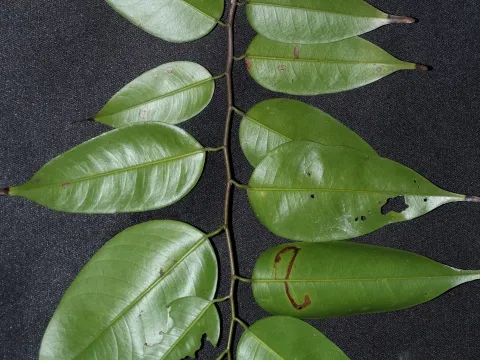
Hopea griffithii
Hopea griffithii
Hopea griffithii is a distinguished member of the Dipterocarpaceae family. This evergreen tropical tree species is an essential component of the forest canopy in Southeast Asia, contributing significantly to biodiversity.
What the section contains
Hopea griffithii
The natural distribution of the species includes the Malay Peninsula, Thailand, and Indonesia. The tree typically thrives in lowland tropical rainforests, often preferring moist, well-drained soil conditions found near riverbanks or in humid forest clearings.
Successful growth requires consistently high levels of atmospheric humidity and a stable tropical climate. The species is sensitive to prolonged drought and prefers deep, fertile soils rich in organic matter to support its rapid development during the early stages.
In its native environment, the tree grows to an impressive stature, developing a dense crown that creates a multilayered forest structure. It relies on the specific microclimate of the rainforest to ensure proper seed germination and seedling survival.
The economic value of this tree is derived primarily from its timber. Known for its density and durability, the wood has been historically sought after for construction and high-quality furniture, although sustainable management practices are now strictly enforced.
The primary threat to Hopea griffithii populations is the widespread deforestation for land-use conversion. The loss of primary forest habitats has led to significant fragmentation, hindering the species' ability to regenerate effectively.
The species is susceptible to various fungal pathogens that target the bark and inner wood, especially in areas with poor airflow and high humidity. These diseases can be particularly devastating for saplings grown in concentrated nursery environments.
Various borers and termites represent the most common pests that affect the integrity of the wood. Infestations are frequently observed in trees that are already suffering from environmental stress or mechanical damage to their protective bark layer.
Human activities remain the most critical pressure, as the slow growth cycle of this species makes it vulnerable to over-exploitation. Conservation efforts are currently underway to protect remaining stands from illegal logging activities.
Climatic changes, specifically the disruption of seasonal rainfall patterns, impact the phenology of the trees. This leads to inconsistent flowering and fruit set, which significantly reduces the availability of viable seeds for natural regeneration.