
Hopea ferrea
Hopea ferrea
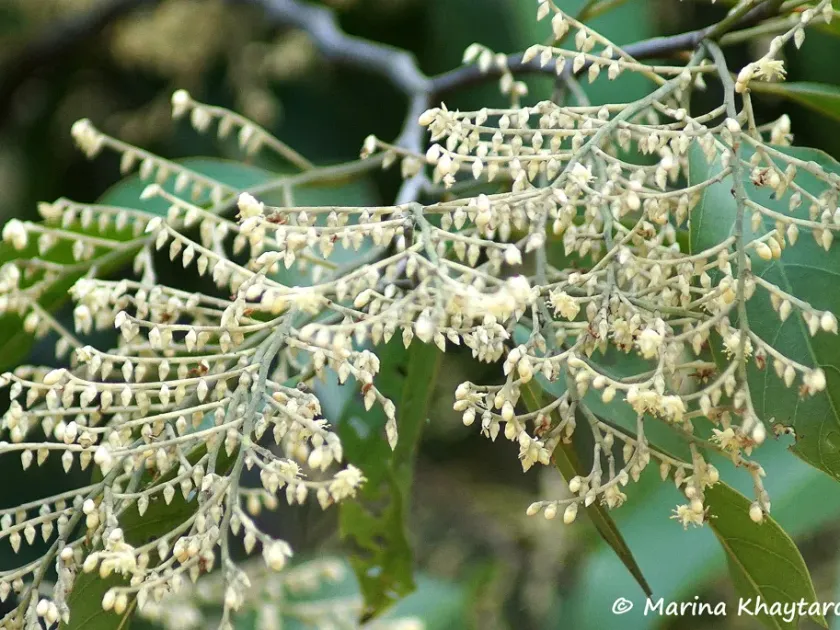
Description
Growing requirements
Hopea ferrea is a prominent member of the Dipterocarpaceae family. It is an evergreen tropical tree naturally distributed throughout the humid rainforests of Southeast Asia, including parts of Indochina and the Malay Archipelago.
The species thrives in regions characterized by high humidity and consistent annual rainfall. Optimal development requires temperatures between +22 and +30 degrees Celsius, as the tree exhibits high sensitivity to cold temperatures and frost.
It prefers deep, well-drained loamy or clayey soils found in undulating or hilly terrain. High organic matter content in the soil profile is essential for the tree to produce its characteristic dense and durable timber.
In agroforestry systems, the tree requires substantial space to allow for canopy development. While young seedlings benefit from partial shade, mature specimens are sun-loving and typically dominate the upper layers of the forest canopy.
The economic value of this tree is derived from its incredibly hard and resilient wood, which is highly sought after for furniture, construction, and specialized engineering applications. Its slow growth rate necessitates strategic long-term planning for sustainable timber production.
Main diseases and pests
The primary threats to Hopea ferrea plantations include fungal root pathogens, which are exacerbated by poor drainage and waterlogged soil conditions. Proactive management of irrigation and drainage is a fundamental agronomic requirement.
Insects, particularly wood-boring beetles, can cause significant damage to young trees. Integrated pest management strategies, emphasizing biological control and ecosystem health, are essential to minimize tree mortality.
Human activities, such as deforestation and land-use changes, remain the most critical threats to the survival of this species in its natural range. Conservation efforts are crucial to preserving the genetic diversity of the plant.
Shifting climatic patterns, including prolonged droughts, may reduce the tree's natural resilience to disease. Mulching around the base of the trees is recommended to maintain stable soil moisture levels.
Monitoring using pheromone traps is standard practice in industrial forestry to detect early signs of infestation. This ensures rapid intervention and reduces the need for extensive chemical pesticide application.