
Hopea dyeri
Hopea dyeri
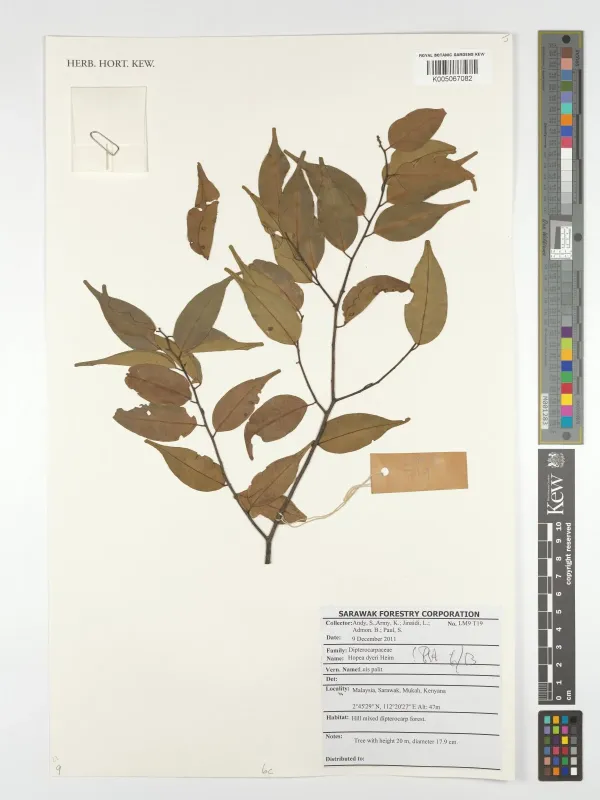
Description
Growing requirements
Hopea dyeri is a distinctive tree species belonging to the Dipterocarpaceae family. It is indigenous to the tropical rainforest ecosystems of Southeast Asia, thriving in high-humidity environments.
The tree requires a warm, equatorial climate throughout the year to achieve optimal growth, as it is highly sensitive to frost and sudden temperature drops.
Soil quality is a critical factor for this species; it prefers deep, well-drained, nutrient-rich soils that are consistently moist but not prone to waterlogging.
Botanically, Hopea dyeri is characterized by its tall, majestic growth habit and high-density wood, which is highly sought after in the timber industry for its durability.
Successful cultivation in forestry projects requires careful attention to seedling stages, as the young trees are vulnerable to competition and environmental stressors in their initial years.
Main diseases and pests
The primary threat to the stability of Hopea dyeri populations is habitat loss due to large-scale deforestation and conversion of forest land for agricultural purposes.
Changes in local precipitation patterns and rising average temperatures pose a severe risk to the natural regeneration cycles of this rare forest species.
Various wood-boring insects act as significant pests, capable of damaging the vascular system of the trees and significantly lowering the market value of the timber.
Fungal pathogens represent an additional risk, frequently attacking the roots and lower trunk sections in areas with poor drainage or stagnant water conditions.
Conservation efforts are currently focused on sustainable harvesting practices and protecting remaining stands of the species within established national parks and reserves.