
Hopea helferi
Hopea helferi
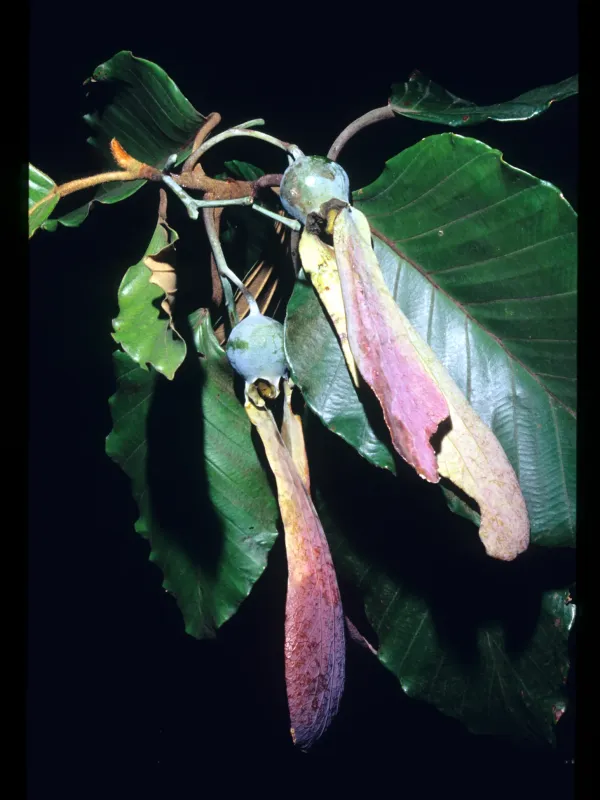
Description
Growing requirements
Hopea helferi is a prominent evergreen tree species belonging to the family Dipterocarpaceae. Native to the tropical rainforests of Southeast Asia, it is highly valued for its timber and role in the forest ecosystem.
This species thrives in a warm and humid tropical climate, requiring consistent rainfall throughout the year. It exhibits an ecological preference for regions where the humidity remains high, which is essential for its vegetative growth.
Soil requirements for Hopea helferi include deep, fertile, and well-drained substrates. While it can adapt to various soil types, alluvial soils that provide both moisture and aeration are considered optimal for the development of the root system.
Botanically, Hopea helferi is characterized by its massive trunk and dense canopy. In its natural habitat, it often serves as a dominant tree species, contributing to the complex structure of the forest layers and providing habitats for various organisms.
From an agricultural and forestry perspective, managing Hopea helferi requires understanding its slow-growth characteristics. It is a long-term investment, as the wood is highly sought after for its density, durability, and resistance to environmental degradation.
Main diseases and pests
The primary threat to Hopea helferi populations is the degradation of tropical forest habitats due to deforestation. The slow reproductive cycle of this species makes it difficult for natural regeneration to keep pace with human activities.
In nursery settings, fungal infections often pose a significant threat to saplings. Maintaining proper air circulation and implementing balanced irrigation schedules are necessary to prevent root and stem rot diseases.
Various insect pests, including borers and leaf-miners, can negatively impact tree health. A robust monitoring program is essential to identify and mitigate pest infestations before they cause irreversible damage to the plantation.
Climate-induced drought cycles present a growing challenge. Extended periods without adequate moisture can lead to physiological stress, making the trees more susceptible to secondary pathogens and reducing overall yield quality.
Invasive plant species can outcompete young Hopea helferi saplings for vital resources such as sunlight and nutrients. Regular maintenance of plantation sites, including clearing competing vegetation, is crucial for the successful establishment of the crop.