
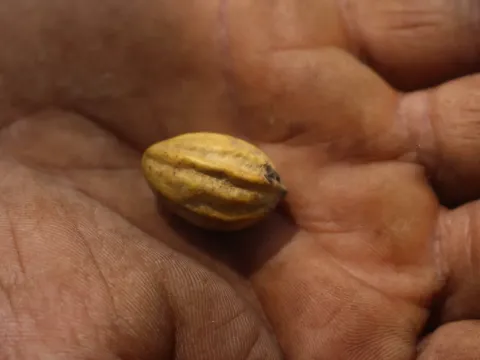
Terminalia chebula
Terminalia chebula
Propagation of Terminalia chebula is primarily achieved through seeds. Due to their hard coat, seeds require scarification or soaking in warm water for 24–48 hours to improve germination rates.
What the section contains
Terminalia chebula
The optimal time for sowing in nurseries is at the beginning of the rainy season, as temperature and humidity facilitate rapid sprouting. Seedlings typically emerge within 3–5 weeks after planting in a suitable substrate.
Young saplings require shading during their first months to prevent foliage scorching from direct sunlight. Pricking out is performed once 2–3 pairs of true leaves have formed.
Transplanting to the permanent site is recommended at the age of 1–2 years, once the root system is sufficiently robust to survive in open field conditions.
Planting density in commercial plantations typically ranges from 5x5 to 7x7 meters, depending on soil quality and the specific objectives of the forestry project.
Terminalia chebula belongs to the Combretaceae family and is a deciduous tree capable of growing up to 30 meters tall in its natural habitat.
The crop thrives in tropical and subtropical climates characterized by distinct rainy seasons followed by a dry dormant period. It is drought-tolerant but requires moderately moist soil for peak development.
The tree prefers deep, well-drained loamy or alluvial soils. It is highly sensitive to waterlogging, which often leads to root rot and stunted development.
Native to the forests of India, Nepal, Sri Lanka, and Southeast Asia, it is naturally adapted to altitudes ranging from sea level up to 2000 meters.
As a light-demanding species, high productivity is best achieved in open areas where the canopy is not suppressed by faster-growing dominant tree species.
Fruiting of Terminalia chebula begins when trees reach 7–10 years of age, with the potential for productive harvests to span several decades under proper care.
Average yield per mature tree varies based on environmental conditions and age, generally providing between 20 to 50 kg of dried fruit per growing season.
Yield efficiency is significantly improved through regular crown pruning, which enhances sunlight penetration to lower branches and facilitates safer manual harvesting.
Commercially, fruits are graded by size and maturity, as these factors directly correlate with the concentration of essential tannins and bioactive therapeutic compounds.
Successful plantation management requires monitoring the cyclical nature of fruiting, which may be more pronounced during years with significant weather irregularities.
The most common health issues involve fungal infections of the bark and leaves caused by excessive humidity, such as anthracnose and various types of foliar spots.
Root rot represents a significant threat in areas with heavy clay soils and poor drainage, necessitating prophylactic measures such as regular soil aeration.
Pest pressure often comes from leaf-eating caterpillars and weevils, which can damage both foliage and the developing fruit buds if left unmonitored.
Integrated pest management, including the use of natural predators and selective insecticides, is recommended to control insect populations without harming the ecosystem.
Sanitation practices—such as the timely removal of infected branches and leaf litter—are crucial to prevent the spread of pathogens throughout the plantation.
Harvesting is performed manually once the fruits reach full maturity, indicated by a deep brown or nearly black color of the pericarp.
After collection, fruits are cleaned of impurities and dried in the shade or in specialized drying units to prevent decay and fungal growth.
High-quality dried fruits possess a dense texture and high tannin content, which are the primary indicators for pharmaceutical and industrial buyers.
Storage should be conducted in cool, dry, and well-ventilated environments to avoid infestation by warehouse pests such as beetles or moths.
The final product is widely used in the manufacturing of ayurvedic medicines, tanning agents for the leather industry, and natural dyes for textile production.