
Terminalia bentzoe
Terminalia bentzoe
Description
Growing requirements
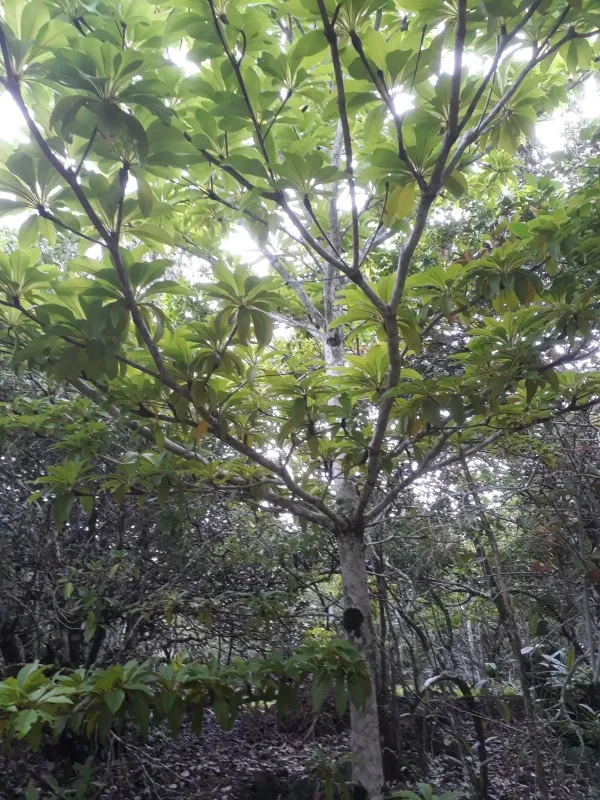
Terminalia bentzoe belongs to the Combretaceae family and is a significant tropical tree species known for its ecological and economic importance. It is a tall, perennial plant that contributes to the forest canopy structure in its native habitat.
The species is indigenous to the Mascarene Islands, including Mauritius and Réunion. It thrives in high-humidity tropical environments that experience distinct seasonal rainfall patterns, which are vital for its vegetative growth stages.
Successful cultivation of Terminalia bentzoe requires well-drained soils, ideally volcanic or alluvial, which provide the necessary nutrients and prevent root zone saturation. Drainage is essential, as waterlogging is a primary stress factor for this species.
Climatic requirements involve consistent high temperatures with minimal seasonal fluctuation. The tree prefers open locations or well-managed forestry stands where sunlight penetration is sufficient for optimal photosynthetic activity.
Agrotechnical management is focused on early-stage protection against wind damage and aggressive competing weeds. Once established, the tree demonstrates high resilience and requires limited manual intervention, making it a sustainable choice for tropical reforestation.
Harvesting
The economic value of Terminalia bentzoe is primarily associated with the extraction of its aromatic resin. This resin is traditionally harvested through careful incision of the trunk, a technique that must be practiced sustainably to preserve the longevity of the tree.
The timber obtained from this species is highly regarded for its physical density and natural durability. It is utilized in local woodworking industries to produce furniture and structural components that remain stable in humid tropical climates.
In agroforestry settings, Terminalia bentzoe provides significant value as a shading tree, helping to modify the microclimate for understory crops. This integration supports biodiversity and enhances the overall productivity of the land.
Seed harvesting is conducted when fruits reach maturity, often characterized by the formation of characteristic wing-like structures. These fruits are then processed and dried to ensure optimal viability for nursery propagation.
Conservation efforts are currently focused on maintaining population stability, as the species is of interest not only for its commercial products but also for its role in restoring native forest landscapes and soil health.