
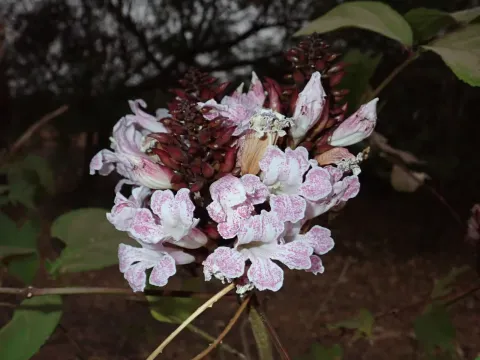
Newbouldia
Newbouldia
Newbouldia is typically propagated through vegetative methods, specifically using stem cuttings. These cuttings are best taken at the beginning of the rainy season to ensure optimal rooting conditions.
What the section contains

Newbouldia
When propagating via seeds, they should be sown in nursery beds with well-draining soil. Maintaining high humidity is essential for successful germination during the early stages.
Young seedlings are transplanted into the field once they reach a height of 40–50 cm. Proper spacing is crucial depending on whether the tree is intended for timber, fencing, or medicinal use.
Planting holes should be prepared with organic matter to provide initial nutrients. Ensuring the soil is loose around the roots helps the plant establish its root system quickly.
Regular watering in the initial weeks post-transplanting is vital to ensure seedling survival. Once established, the tree is known for its remarkable ability to withstand adverse conditions.
Newbouldia, a member of the Bignoniaceae family, is a versatile tropical tree or shrub native to the regions of West and Central Africa, known for its resilience.
The plant thrives in a tropical climate with high humidity. While it prefers moist environments, mature trees demonstrate significant drought tolerance, making them ideal for arid regions.
It adapts to a wide range of soil types, though it performs best in loamy, well-drained soils. Avoid waterlogged areas as they can lead to root system decay over time.
The tree enjoys full sun exposure but can also tolerate partial shade. This adaptability makes it suitable for intercropping within agroforestry systems.
Mulching is a recommended practice to maintain soil moisture and regulate soil temperature, which significantly benefits the growth rate of young Newbouldia trees.
Newbouldia is highly valued for its multifaceted economic uses. Its timber is durable and resistant to decay, making it suitable for fence posts, tool handles, and construction.
The bark, leaves, and roots are widely utilized in traditional medicine for their anti-inflammatory and antiseptic properties, providing a steady source of medicinal raw material.
In agricultural settings, Newbouldia is frequently planted as a living fence or windbreak, effectively protecting crops from wind damage and soil erosion.
The yield of biomass is sustainable if harvested properly. Selective pruning encourages the tree to produce more branches and foliage, maximizing the output of medicinal parts.
Beyond its physical products, the tree contributes to environmental health by restoring soil fertility and providing habitat for various beneficial local insect species.
Generally robust and hardy, Newbouldia faces few serious threats from pests or diseases when grown under appropriate environmental conditions.
In excessively damp conditions, fungal infections might occur, manifesting as leaf spots or stem rot. Proper spacing and airflow are the best preventative measures.
Occasional infestations by defoliating insects or beetles can occur, but these are typically manageable and rarely cause significant economic loss to established trees.
The most significant threat is over-harvesting of the bark for medicinal purposes, which can weaken the tree and invite pests that attack the compromised cambium layer.
Integrated pest management, focusing on maintaining tree health through proper fertilization and thinning, is far more effective than chemical control measures for this species.