
Newbouldia laevis
Newbouldia laevis
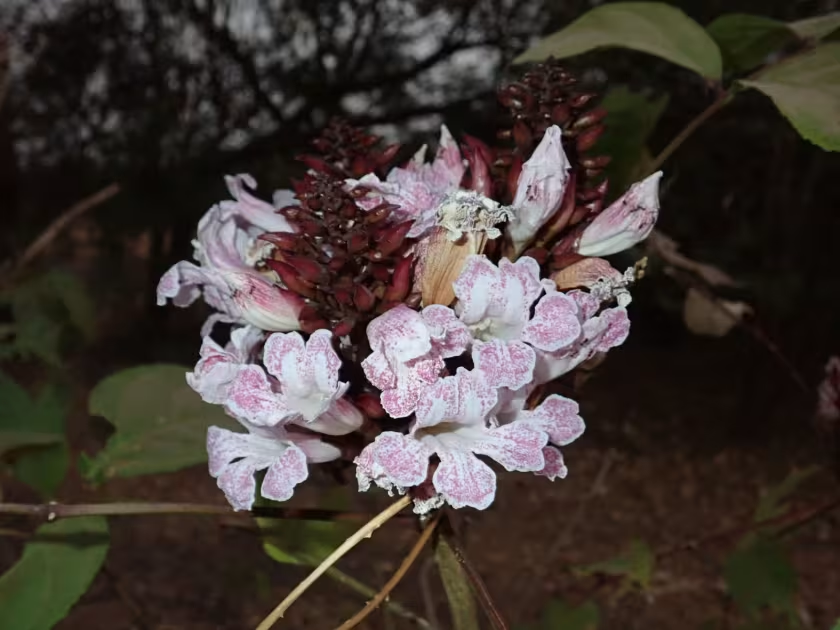
Description
Sowing dates
Propagation of Newbouldia laevis is predominantly carried out using stem cuttings, which ensures high survival rates and rapid establishment. This method is preferred by farmers for establishing live fences and agricultural boundaries.
The ideal time for planting is the onset of the rainy season. High humidity and consistent rainfall provide the necessary conditions for the roots to develop before the drier months begin.
Seeds can also be used for propagation, though they require a well-prepared nursery environment. They are typically sown in lightweight, fertile soil and kept in partially shaded conditions until they reach a robust size.
Spacing between plants depends on the intended use. For fence lines, a density of one plant per meter is standard, while for reforestation or soil improvement purposes, wider spacing is advised.
Young plants need consistent moisture in the first months. Providing mulch around the base of the seedlings helps retain soil moisture and prevents weeds from competing for nutrients.
Growing requirements
Newbouldia laevis belongs to the Bignoniaceae family and is native to the tropical regions of West and Central Africa. It thrives in humid tropical climates characterized by high temperatures and distinct rainfall patterns.
The plant requires deep, well-drained soils to prosper. While it is adaptable to various soil types, loamy soils rich in organic matter produce the most vigorous growth and highest biomass production.
It is a sun-loving species that prefers open environments. Adequate sunlight is essential for flowering and the development of the chemical compounds found in the bark and leaves.
Temperature tolerance is limited to tropical and subtropical ranges. Frost or prolonged cold spells will severely damage or kill the plant, making it unsuitable for cooler temperate regions.
The species is highly valued in agroforestry systems due to its deep root architecture, which helps stabilize slopes, prevent soil erosion, and improve soil drainage.
Yield
The yield of Newbouldia laevis includes medicinal bark, leaves, and wood. Medicinal parts are harvested carefully to ensure the tree continues to grow, usually through rotational harvesting practices.
As a source of timber, the wood is utilized for tool handles, posts, and general construction. The maturity period for timber harvesting typically ranges from several years to a decade depending on local conditions.
Biomass production for medicinal use is enhanced through regular pruning, which promotes the growth of new shoots and leaves. This cyclical harvesting allows for sustained yearly production.
In addition to its utilitarian value, the tree acts as a soil improver. Fallen leaves provide high-quality mulch that breaks down to enrich the topsoil with essential nutrients.
Effective management of Newbouldia groves involves thinning to provide more light to the most productive specimens, which significantly boosts the overall leaf yield per acre.
Main diseases and pests
The primary threats to Newbouldia laevis include fungal pathogens that attack the root system during waterlogged conditions. Proper soil drainage is the most effective preventative measure.
Termites can pose a significant threat to the bark of mature trees, especially in degraded areas. Regular inspection and the removal of dead wood from the vicinity help reduce pest pressure.
Competition from fast-growing invasive weeds is a concern for young plantations. Maintaining clean pathways and clear ground around the tree bases is critical in the first two years of growth.
Large livestock can cause mechanical damage by stripping bark or trampling young saplings. Protective barriers or fencing are recommended in areas where animals graze freely.
Overall, the plant is remarkably hardy. Most cultivation issues are mitigated by selecting appropriate sites and avoiding excessive water saturation in the planting pits.