
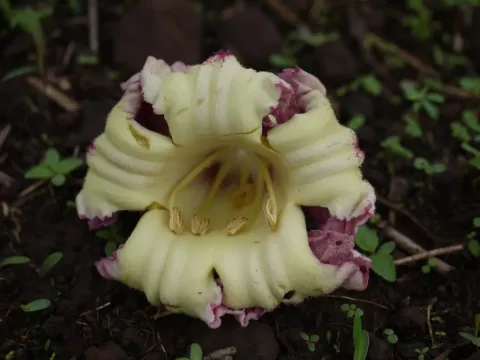
Oroxylum
Oroxylum
Oroxylum indicum is typically propagated by seeds, which are sown into prepared substrate immediately after ripening. The seeds demonstrate high germination rates but require strict adherence to temperature conditions suitable for tropical species.
What the section contains

Oroxylum
For germination, light, well-draining mixtures enriched with sand and humus are utilized. Sowing is recommended during the spring-summer period when day length is at its peak, ensuring active seedling growth.
Once true leaves appear, seedlings are transplanted into individual containers. The plant possesses a deep taproot system, so transplantation to a permanent site must be performed with extreme care to avoid root damage.
In plantation settings, planting density is calculated based on the tree's sprawling crown. An optimal distance between saplings is 5 to 7 meters, ensuring sufficient light penetration and aeration.
In its natural habitat, the plant often reproduces through self-seeding; however, in agricultural practice, controlled seed stratification is preferred to ensure uniform and vigorous emergence.
The culture belongs to the Bignoniaceae family and is native to the tropical forests of South-East Asia and India. The plant prefers a humid tropical and subtropical climate with a distinct dormant period.
Oroxylum is quite demanding regarding soil conditions: it develops best in deep, loamy, or sandy soils with a neutral or slightly acidic pH. Excellent drainage is a critical factor, as waterlogging is detrimental to its root system.
During the active growth phase, the tree requires intense sunlight. Oroxylum is sensitive to cold temperatures, thus its commercial cultivation is restricted to frost-free zones.
Oroxylum is a deciduous tree that reaches a height of 12-15 meters. It is characterized by large, complex pinnate leaves and specific fruits — long, flat capsules resembling swords, which earned the plant its common nickname "midnight horror" or "sword tree".
Successful growth requires protection from strong winds that can damage large, fragile leaves and tender shoots. Regular irrigation is necessary during dry spells to maintain tissue turgor.
The primary economic value lies in the fruits, seeds, and bark of the Oroxylum, which are widely used in traditional medicine and pharmacology. Yield depends on the tree's age and environmental conditions.
Fruits are harvested before they fully dry, while they remain fleshy, as they possess the highest biological activity during this stage. A mature tree can yield several dozen large fruits per season.
The seeds contain unique flavonoids such as baicalin and oroxylin, which are valuable raw materials for the pharmaceutical industry. Standardization of the collection process ensures high-quality plant material for extraction.
The bark of the tree is also valued as a component in medicinal herbal formulas. It is harvested with extreme caution to avoid damaging the tree, adhering to the principles of sustainable natural resource management.
The economic efficiency of this crop is determined by the high demand for natural components used in the production of dietary supplements and anti-inflammatory or antioxidant drugs.
The crop is generally resistant to many typical pests; however, under conditions of high humidity, it can be susceptible to fungal diseases such as powdery mildew or root rot.
The main pests capable of damaging young plantings include leaf-eating insects and caterpillars. If early signs of infestation are detected, preventive treatment with biological insecticides is recommended.
Improper agricultural techniques, particularly over-irrigation, often lead to the development of pathogenic microflora in the root zone. Prevention involves maintaining soil hygiene and ensuring a proper irrigation schedule.
In certain regions, Oroxylum may suffer from nematode infestations, necessitating pre-plant soil disinfection when setting up large-scale plantations.
Regular monitoring of the foliage status allows for the timely containment of infections, ensuring the plantation maintains high productivity levels.
Harvesting Oroxylum fruits requires manual labor due to their large size and fragile structure. The collection is carried out in several stages as the pods ripen on the tree.
Harvested fruits undergo immediate primary processing, such as drying or seed extraction, to prevent raw material spoilage. Careful control of drying temperatures is crucial to preserve the plant's active chemical constituents.
For bark harvesting, mature specimens are selected, with material being taken partially from different sides of the trunk. This allows the tree to recover from the procedure and continue its normal growth.
Transport of the raw material must be conducted in ventilated containers to prevent mold growth in high humidity environments.
Proper organization of the harvest cycle minimizes losses and ensures a steady supply of high-quality raw material for pharmaceutical manufacturers throughout the season.