
Mansoa difficilis
Mansoa difficilis
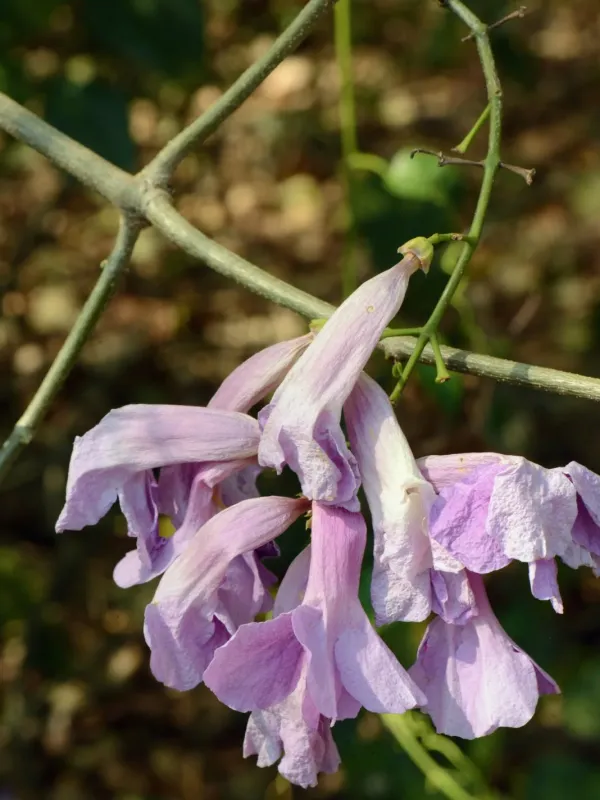
Description
Growing requirements
Mansoa difficilis is a woody perennial vine species belonging to the Bignoniaceae family. Native to the tropical regions of South America, this plant is well-adapted to humid forest environments where it climbs trees and shrubs to reach the forest canopy for sunlight.
Botanically, the plant is characterized by its opposite leaves, some of which develop into tendrils to facilitate climbing. As the vine matures, its stems become woody and robust, allowing it to cover large vertical structures or tree trunks in its natural habitat.
Regarding climatic requirements, the plant demands consistent tropical conditions. It thrives in high humidity and warm temperatures throughout the year. It cannot survive frosts, making it suitable for tropical climates or greenhouse cultivation in cooler regions.
The soil must be fertile, well-draining, and rich in organic matter. Proper drainage is essential, as the plant is highly sensitive to waterlogged conditions, which often cause root rot and rapid decline in vitality.
The primary use of Mansoa difficilis is in ornamental horticulture. It is frequently employed for vertical landscaping, covering fences, pergolas, and trellises. Its rapid growth and lush foliage provide both aesthetic value and privacy screens.
Main diseases and pests
The most common health issues for this vine are related to fungal diseases, often caused by stagnant air and excessive soil moisture. Root rot is the primary concern, requiring strict adherence to irrigation schedules to ensure the root zone remains healthy.
Spider mites are the most persistent pests for Mansoa difficilis, especially when cultivated in greenhouse environments. These mites thrive in dry conditions and can cause significant damage to foliage if not controlled promptly.
Mealybugs also pose a threat to the plant, hiding in the leaf axils and stems. Their presence is usually indicated by white cottony masses, which should be treated immediately to prevent the infestation from spreading across the entire plant.
Inadequate light exposure often leads to poor plant vigor, which in turn makes the vine more susceptible to both pests and diseases. Providing sufficient light is a key factor in natural resistance and overall plant health.
Effective pest management includes a combination of cultural practices, such as proper spacing and ventilation, and the use of insecticidal soaps or biological controls to protect the ornamental quality of the vines.