
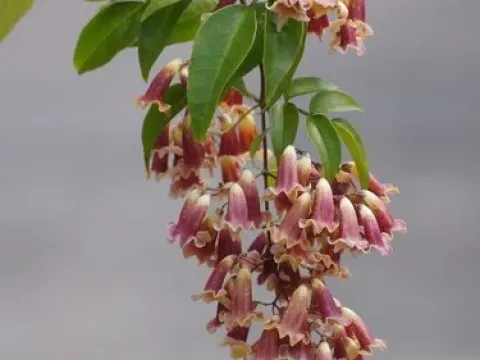
Pandorea
Pandorea
Pandorea is a genus of evergreen woody vines belonging to the Bignoniaceae family. These plants are native to the tropical and subtropical regions of Australia, Malaysia, and New Caledonia, where they grow as vigorous climbers.
What the section contains

Pandorea
The plant thrives in bright, indirect light. While it can tolerate full sun in cooler climates, partial shade during the hottest parts of the day is recommended to prevent leaf scorching and to maintain the plant's aesthetic appeal.
Soil requirements for Pandorea involve a well-draining, nutrient-rich substrate. A mix of peat, perlite, and organic compost is ideal for container-grown specimens to ensure sufficient aeration and moisture retention without stagnation.
Watering should be consistent throughout the growing season, keeping the soil moist but not waterlogged. During winter dormancy, the watering frequency should be significantly reduced to allow the plant a resting period.
Providing structural support is essential for the healthy development of this vine. Pandorea is often utilized in landscape architecture to cover fences, trellises, or pergolas due to its rapid growth and attractive foliage.
Pandorea is susceptible to several common pests, most notably aphids and spider mites. These pests thrive in dry environments and can cause significant damage to the plant's sap-rich tissues if left untreated.
Fungal issues, such as root rot or powdery mildew, often arise due to poor drainage or stagnant air conditions. Avoiding overhead watering and ensuring proper airflow around the plant can significantly mitigate these risks.
Integrated pest management, including regular inspection of foliage and early application of insecticidal soaps, is highly effective for controlling infestations. Maintaining plant vigor through proper fertilization is also a key defense strategy.
If fungal infections are detected, immediate pruning of the affected parts is required to stop the spread. Following this, the application of appropriate fungicides can protect the remaining healthy vine sections.
- Regular pruning for shape and health
- Routine monitoring for leaf discoloration
- Maintenance of moderate humidity
- Proper sanitation of gardening tools