
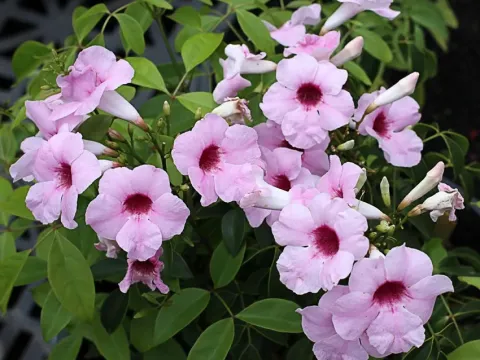
Pandorea
Pandorea (Endl.) Spach.
Pandorea is a genus of evergreen woody climbers belonging to the Bignoniaceae family. Native to tropical and subtropical regions of Australia, Malaysia, and New Caledonia, these plants are prized for their vigorous growth and beautiful flowers.
What the section contains


Pandorea
The plant thrives in full sun but benefits from light shade during the hottest parts of the day in tropical climates. It is highly sensitive to frost, which limits its outdoor cultivation to mild, temperate, or tropical zones where winter temperatures remain well above freezing.
For optimal growth, Pandorea requires fertile, well-draining soil with a slightly acidic to neutral pH. Providing a consistent moisture supply is essential, but waterlogging should be strictly avoided to prevent root damage.
Botanically, it features pinnately compound leaves and tubular to bell-shaped flowers that appear in clusters. It is a robust climber that needs sturdy supports like trellises, wires, or arbors to manifest its full aesthetic potential.
In landscaping, this species is mainly utilized for vertical greening. It serves as an excellent choice for screening, covering fences, or creating shaded tunnels in outdoor gardens and conservatory settings.
The primary pests affecting Pandorea include spider mites, mealybugs, and scale insects. These organisms thrive in environments with low humidity and high heat, often attacking the tender undersides of the leaves.
Fungal infections, such as root rot caused by overwatering or poor soil drainage, pose a significant threat to the plant's health. Powdery mildew can also occur if the foliage is kept too damp without adequate airflow.
Integrated pest management strategies should focus on maintaining proper plant spacing and ensuring good ventilation. Regular inspection of the foliage allows for early detection and manual removal of small pest populations.
If chemical intervention is necessary, the use of systemic insecticides or horticultural oils is recommended. Fungicides should only be applied when environmental conditions favor the rapid spread of fungal spores.
Sanitation is key to preventing disease transmission. Dead or diseased plant material should be pruned away regularly, and pruning tools should be disinfected to prevent the spread of soil-borne or systemic pathogens.