
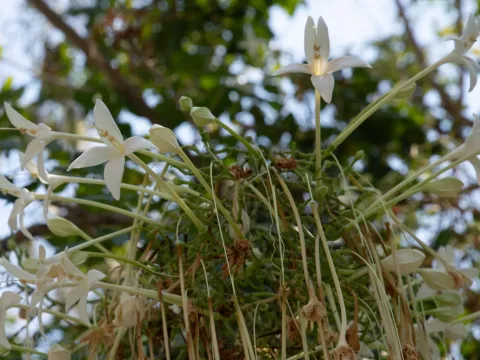
Millingtonia
Millingtonia
Millingtonia (Millingtonia hortensis), commonly referred to as the Indian cork tree, is a member of the Bignoniaceae family. It is recognized for its tall, slender habit and fragrant, white trumpet-shaped flowers that bloom in clusters.
What the section contains

Millingtonia
Native to the regions of Southeast Asia and India, this species thrives in tropical and subtropical climates. It requires consistent warmth and protection from frost, which makes it suitable primarily for cultivation in specific temperate zones or climate-controlled environments.
The ideal soil conditions for Millingtonia include well-drained, fertile loamy soil. While it is adaptable to various soil types, maintaining a neutral pH level helps in maximizing the nutrient uptake and overall vitality of the tree.
Regarding agrotechnical practices, the tree requires full sun exposure to flourish and maintain its structural integrity. Regular irrigation is necessary, particularly during the initial years of development, to ensure deep root establishment.
Commercially and ornamentally, the tree is highly valued for city beautification projects. Its bark provides a soft, cork-like material, and the tree is frequently utilized in traditional medicine practices within its native range.
The primary pests affecting Millingtonia include scale insects and spider mites, which typically target the foliage during periods of dry, hot weather.
Fungal pathogens can pose a significant threat if the soil remains waterlogged for extended periods, leading to root rot and vascular system disruption.
Leaf-eating caterpillars may occasionally cause damage to the canopy; however, these infestations are generally manageable with integrated pest management techniques.
Effective management includes maintaining adequate spacing between individual trees to promote air circulation and reduce the incidence of fungal outbreaks.
Routine inspections of the trunk and branches for signs of wood-boring insects are essential to prevent structural decline and maintain the tree's health.