
Markhamia
Markhamia
Markhamia is a genus of flowering plants in the family Bignoniaceae, native to tropical Africa. These trees are highly valued in forestry and agricultural development due to their rapid growth rate and ecological adaptability.
What the section contains


Markhamia
These trees thrive in tropical climates with warm temperatures and seasonal rainfall. They are highly versatile regarding site selection, though they achieve maximum height and trunk diameter in well-drained, fertile loamy soils.
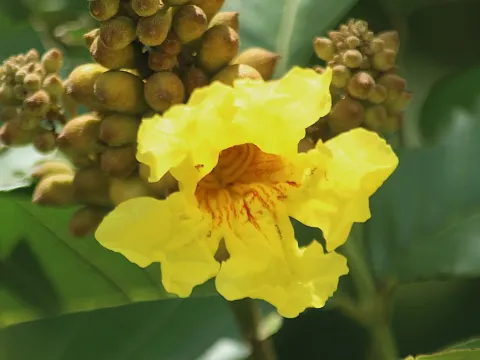
Botanically, the species are characterized by pinnate leaves and bell-shaped flowers, often bright yellow, which are attractive to pollinators. The trees can reach considerable heights, providing significant canopy cover.
In agricultural systems, Markhamia is commonly integrated into agroforestry schemes. It serves as an excellent shade tree for shade-tolerant crops like coffee, while its deep root system helps in stabilizing soil and preventing erosion.
Economically, the wood of Markhamia is highly sought after. It is strong, durable, and naturally resistant to termites, making it a sustainable alternative to slower-growing timber species for furniture and construction.
Young Markhamia saplings are often susceptible to defoliating insects, such as caterpillars and beetles, which can significantly retard early development if left unmanaged.
Fungal infections of the root system are the most serious disease risk, especially in low-lying areas where waterlogging is a common issue during the rainy season.
Stem-boring insects present a technical challenge, as they penetrate the bark and inner wood, creating structural weaknesses and pathways for secondary bacterial decay.
Effective management includes maintaining proper tree spacing to ensure good air circulation, which helps dry the canopy and reduces the risk of fungal proliferation.
Regular monitoring of the plantation is essential for early pest detection. Integrated pest management (IPM) strategies, including biological control, are preferred over broad-spectrum chemical interventions.