
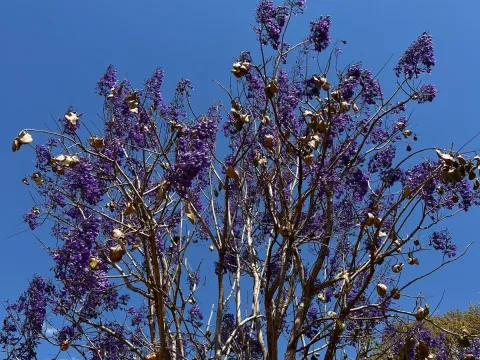
Brazilian jacaranda
Jacaranda brasiliana
Brazilian jacaranda (Jacaranda brasiliana) is a significant woody plant species belonging to the Bignoniaceae family. It is native to the tropical forests of Brazil, where it thrives as a medium-to-large sized deciduous or semi-evergreen tree with high ecological value.
What the section contains
Brazilian jacaranda
The climate requirements for this species include consistent warmth and high solar radiation. It is highly sensitive to frost, which limits its commercial cultivation to frost-free tropical or subtropical regions where temperatures remain stable throughout the year.
Regarding soil preferences, the plant demands well-drained, nutrient-rich loamy substrates. It is essential to ensure that the site has excellent drainage, as the species is prone to root asphyxiation if the soil remains waterlogged for extended periods.
The primary use of Brazilian jacaranda is in the timber industry, as its wood is highly prized for its durability, dense structure, and aesthetic beauty. It is frequently used in high-end furniture manufacturing, musical instrument components, and fine woodworking.
Agronomic management involves spacing seedlings correctly to ensure adequate airflow and sunlight penetration. In professional plantation settings, pruning is used to encourage straight, high-quality trunk development, which maximizes the value of the harvested timber.
Root rot is the most serious disease threat for Jacaranda brasiliana, typically induced by poor drainage conditions or excessive irrigation. Implementing proper drainage protocols and using prophylactic fungicide treatments is crucial for plantation health.
Pests such as leaf-eating insects and scale insects can significantly impair the photosynthetic capacity of the trees. Integrated pest management strategies, including the use of targeted insecticides, are often necessary to maintain robust growth rates.
Stem-boring beetles can cause severe structural damage to the wood, leading to timber depreciation. Regular inspections and the removal of heavily infested branches help mitigate the spread of these wood-boring organisms across the forest plot.
Nutrient deficiencies, particularly involving nitrogen and iron, can lead to foliage discoloration and stunted growth. Soil analysis-based fertilization plans are recommended to ensure that the trees receive a balanced intake of essential micronutrients.
Competition from aggressive herbaceous weeds can stifle young saplings. Establishing a weed-free zone around the base of each tree and applying mulch helps to stabilize soil moisture and support the initial stages of tree establishment.