
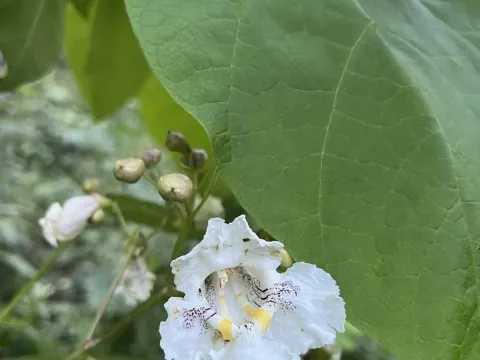
Catalpa
Catalpa
Catalpa propagation is most commonly achieved through seeds or cuttings. Seeds are sown in open ground or greenhouses in spring, once soil temperatures reach 12–15 degrees Celsius.
What the section contains


Catalpa
For seed propagation, sowing is performed at a depth of 1-2 centimeters, ensuring stable substrate moisture until germination, which typically occurs in 3-4 weeks.
Cuttings of Catalpa are taken in late summer using semi-hardwood shoots from the current season. Cuttings are treated with rooting stimulants to increase survival rates.
To accelerate the growth of young seedlings during their first year, it is recommended to use cold frames or protected nursery beds with fertile, light substrate.
Transplanting to a permanent location is performed at the age of 2-3 years, when the root system is sufficiently developed to adapt to field conditions.
Catalpa is a light-demanding culture that requires open, sunny areas protected from strong winds, which can damage the large, ornamental leaves.
The plant prefers deep, fertile, well-drained loamy soils with a neutral or slightly alkaline soil reaction.
The species has moderate drought tolerance; however, during the active growing season, it requires regular irrigation, especially during hot weather spells.
Climatic requirements vary by species, but most representatives of the genus need protection from severe frosts during the first years after planting in a permanent spot.
For successful crown development and aesthetic maintenance, systematic sanitary and formative pruning is required in spring, before the sap begins to flow.
Among pests, the greatest danger to Catalpa is the Catalpa sphinx moth, whose caterpillars can defoliate an entire tree in a short period.
Under conditions of high humidity or excessive irrigation, the plant may be susceptible to fungal diseases such as verticillium wilt.
To combat insect pests, timely spraying with systemic insecticides is applied, particularly during periods of mass moth activity.
Disease prevention involves adhering to proper irrigation regimes, avoiding moisture stagnation in the root zone, and ensuring good air circulation within the canopy.
Healthy plant condition is also maintained through the application of balanced mineral fertilizers, which strengthen the tree's natural resistance to infections.