
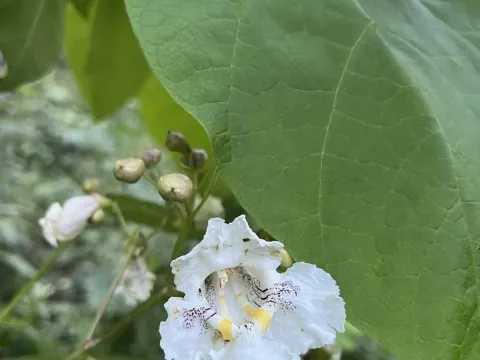
Catalpa
Catalpa Scop.
Catalpa seeds are typically sown in the spring after the risk of frost has passed. Planting in late April or May ensures optimal soil temperature for germination.
What the section contains


Catalpa
Seeds should be planted at a depth of 1.5 to 2 centimeters in well-prepared, loose soil. Maintaining consistent soil moisture is crucial for successful seed development during the first few weeks.
Greenwood cuttings are another common method for propagating the plant. These cuttings should be taken in mid-summer and kept in a high-humidity environment to encourage rooting.
Using a starter fertilizer during the sowing phase helps seedlings establish a strong root system. Proper spacing is essential to ensure adequate airflow and prevent competition between young plants.
When sowing in trays, ensure that the substrate is well-drained to avoid fungal issues that can affect young seedlings during the delicate early growth stages.
The Catalpa tree belongs to the Bignoniaceae family and thrives in full sun exposure. It requires bright locations to reach its full potential and produce vibrant flowers.
Rich, loamy, and fertile soil is preferred for optimal growth. Good drainage is vital, as the tree does not tolerate waterlogged conditions that can cause root rot.
Regular watering is necessary, especially during the dry summer months. While mature trees are somewhat drought-tolerant, consistent moisture is key to maintaining large, lush foliage.
Shelter from strong winds is important because the large leaves are prone to mechanical damage. Placing the tree in a protected area will preserve its aesthetic appeal.
Annual fertilization with organic matter or balanced mineral fertilizers promotes vigorous growth. Applications should be concentrated in the early spring as the tree exits dormancy.
Common pests affecting Catalpa include aphids and scale insects, which feed on the sap of young branches. These pests can weaken the overall health of the tree if left uncontrolled.
Verticillium wilt is a significant fungal threat that can lead to leaf yellowing and branch dieback. It is a serious condition that requires immediate pruning of affected areas.
Powdery mildew often appears during periods of high humidity. It manifests as a white, dusty layer on the leaves, potentially reducing the tree's ability to photosynthesize effectively.
Regular monitoring of foliage and branches is essential for early detection of issues. Using insecticidal soaps or systemic fungicides can effectively manage common pest and disease outbreaks.
Sanitation practices, including the removal of fallen leaves and the pruning of dead wood, are critical for minimizing the overwintering of pathogens in the garden soil.