
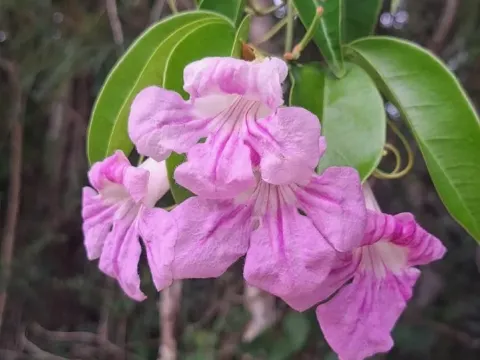
Bignonia corymbosa
Bignonia corymbosa
Bignonia corymbosa is a vigorous perennial evergreen vine belonging to the Bignoniaceae family. Originating from the tropical regions of the Americas, this species is prized for its ornamental qualities and rapid growth rate in warm environments.
What the section contains
Bignonia corymbosa
The plant thrives in regions with tropical to subtropical climates, requiring consistent temperatures throughout the year. It does not tolerate frost, making it suitable for conservatory or greenhouse cultivation in cooler zones.
Optimal growth is achieved in well-draining, nutrient-rich soil that mimics the forest floor environment. Incorporating organic matter into the planting medium helps maintain the balance between moisture retention and essential aeration.
Structural support is vital for the development of Bignonia corymbosa. As a climbing plant, it requires trellises, arbors, or wall supports to display its full architectural potential and ensure proper air circulation through the foliage.
Adequate sunlight is necessary for bloom production, though the plant benefits from partial shade during the peak heat of the day. Consistent moisture is required, especially during the active growing season, to maintain the luster of its leaves.
Pests such as spider mites, aphids, and mealybugs are the primary threats to the health of Bignonia corymbosa when cultivated in indoor or greenhouse settings where natural predators are absent.
Fungal issues, including powdery mildew and root rot, are common if the soil remains waterlogged or if there is poor airflow around the stems, which encourages the growth of pathogens.
Integrated pest management strategies should be employed, focusing on cultural practices like adjusting humidity levels and sanitation to minimize the reliance on chemical interventions.
Regular monitoring of leaf undersides is essential, as early detection of infestations allows for simple physical removal or targeted application of insecticidal soaps to prevent outbreaks.
Maintaining a balanced nutritional profile through seasonal fertilization helps the plant build resilience against opportunistic diseases and pests, ensuring robust growth cycles.