
Garlic vine
Mansoa alliacea
Description
Growing requirements
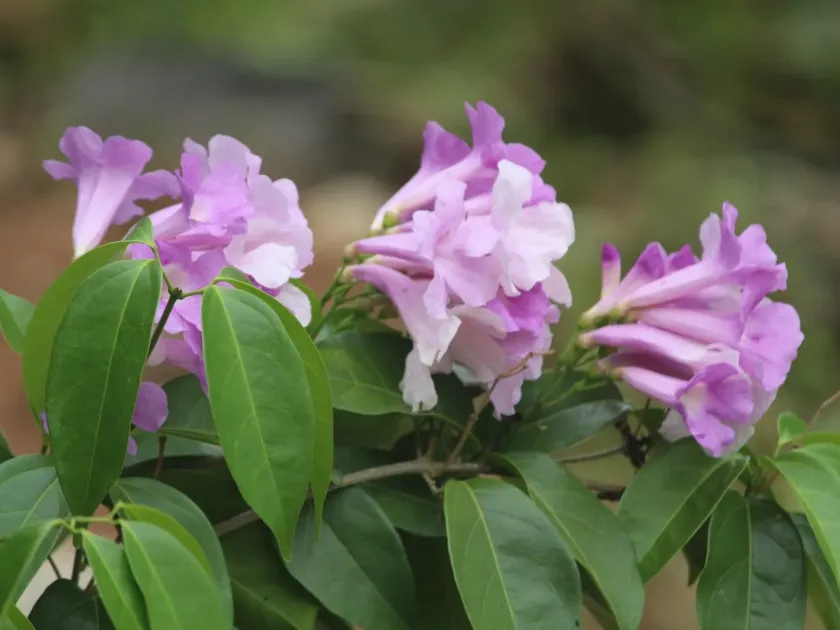
Garlic vine (Mansoa alliacea) is a woody climbing vine belonging to the Bignoniaceae family. Native to the tropical forests of the Amazon, it is renowned for its distinct garlic scent when leaves or flowers are crushed.
The crop requires a warm tropical climate to thrive. It should be grown in temperatures between 20 and 30 degrees Celsius, as it is highly sensitive to cold and frost, which can cause severe damage or death.
Proper soil requirements include a well-draining, nutrient-rich potting mix. A combination of organic compost and perlite or coarse sand helps maintain the necessary aeration for the vine's root system.
High humidity levels are essential for the healthy growth of this species. In cultivation, it performs best in high-moisture environments, often requiring regular misting or placement near water sources.
Light exposure should be bright but filtered. While the vine can tolerate partial shade, it requires adequate light intensity to produce its vibrant violet-to-white flowers, which typically bloom in clusters.
Main diseases and pests
Spider mites are the most common pest, especially in indoor environments where the air is dry. They can rapidly infest the foliage and cause stunted growth.
Mealybugs and scale insects may also target the vine. These pests hide in the leaf axils, making them difficult to detect and treat without regular inspections.
Root rot is the most serious threat, typically caused by overwatering or poor drainage. This condition quickly leads to the decay of the entire plant structure.
Fungal leaf spot can occur if there is poor air circulation and excessive moisture on the foliage, leading to unsightly dark lesions on the leaves.
Regular maintenance, including removing dead leaves and ensuring proper ventilation, is the best strategy for preventing both pest outbreaks and fungal infections.