
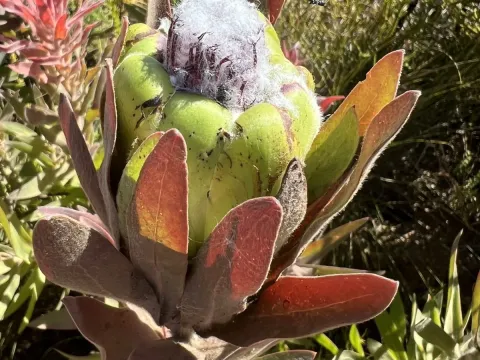
Crown protea
Protea coronata
Crown protea (Protea coronata) is a vigorous, upright evergreen shrub belonging to the Proteaceae family. Native to the mountainous regions of South Africa, it is highly valued in commercial floriculture for its striking crown-like inflorescences.
What the section contains
Crown protea
The plant grows best in areas with a Mediterranean climate, characterized by cool, wet winters and dry, warm summers. It requires full sun exposure to stimulate the development of robust, high-quality flower heads during the growing season.
Soil requirements for Protea coronata are very specific: it demands acidic, well-drained, and nutrient-poor soil. The plant has evolved specialized root structures called proteoid roots that efficiently capture phosphorus, making conventional fertilizers potentially fatal.
Proper drainage is the cornerstone of its cultivation. Even brief periods of waterlogging will lead to root death, which is why commercial growers often utilize raised beds or specialized container substrates rich in coarse sand or perlite.
Adequate spacing is crucial to ensure good airflow between plants. This helps in maintaining a dry microclimate around the foliage, which is essential to prevent the buildup of moisture that promotes fungal outbreaks.
The most devastating threats to this species are fungal root pathogens, particularly Phytophthora cinnamomi. Once established in the soil, these fungi are nearly impossible to eradicate, emphasizing the need for strict preventative measures.
Common insect pests include mealybugs and spider mites, which thrive in protected greenhouse environments. Regular scouting and the application of integrated pest management (IPM) techniques are vital to keep population levels under control.
Crown rot caused by environmental stress can also occur if the plants are subjected to excessive fertilization or high humidity. Maintaining a dry, well-ventilated growing environment is the best deterrent against these threats.
Physical damage to the root system during weeding or transplanting serves as an entry point for pathogens. Minimal soil disturbance is recommended to preserve the integrity of the root zone throughout the crop's life cycle.
Using certified, disease-free nursery stock is the most important step in establishing a healthy plantation, as many soil-borne diseases can remain dormant in planting materials for long periods.
Harvesting usually takes place when the flower head is at the desired stage of development, typically when the involucral bracts are fully pigmented but the center of the inflorescence is still tight.
Sharp, sanitized tools are mandatory for the harvest process to prevent the transmission of vascular diseases from one plant to another. Cuts are typically made above a dormant bud to encourage healthy vegetative regrowth.
Post-harvest care involves immediate cooling of the stems in a clean water solution to ensure turgidity. This step is critical to maintaining the long vase life for which this species is commercially famous.
Stems are graded based on their length and the size of the inflorescence. Defective stems or those showing signs of insect feeding are discarded to meet the high quality standards of the international flower market.
Proper ventilation during the initial storage phase is essential to remove field heat and prevent condensation, which can lead to gray mold developing on the bracts during transport.