
Dwarf sugarbush
Protea nana
Description
Sowing dates
The dwarf sugarbush (Protea nana) is a distinct species within the Proteaceae family, native to the rugged mountainous regions of South Africa's Western Cape.
Propagation is primarily achieved through seeds, which require a specialized treatment to simulate the natural fire cycle and cool-moist germination periods found in their habitat.
Seeds should be sown in a highly porous, sterile, and acidic medium. Drainage is the most critical factor to ensure successful germination and seedling health.
A diurnal temperature rhythm is essential during the incubation phase, promoting robust growth and reducing the risk of damping-off diseases.
Young plants are particularly vulnerable to root disturbances, so they should be propagated in pots that allow for minimal handling during the transplantation process.
Growing requirements
Protea nana thrives in nutrient-poor, acidic soils. It has evolved highly specialized proteoid roots that efficiently extract phosphorus from very low-fertility environments.
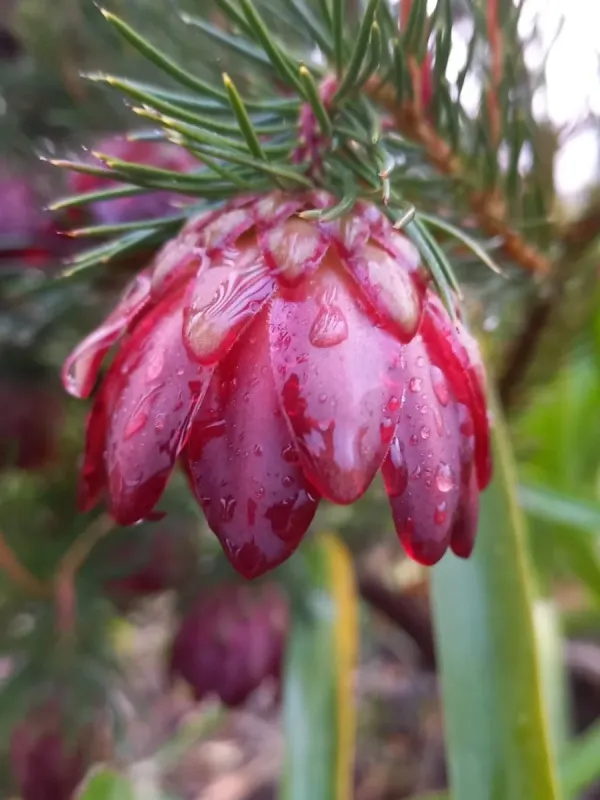
The species requires full solar exposure to maintain its compact, shrub-like form and to stimulate the development of its characteristic nodding flower heads.
Climatic requirements involve mild, frost-free conditions with low humidity. High atmospheric humidity combined with high temperatures can lead to rapid fungal decay.
Water management is critical: the substrate must never be allowed to waterlog, but it should remain consistently moist enough to support metabolic functions.
Fertilization must be avoided or strictly limited to fertilizers specifically formulated for phosphorus-sensitive plants, as standard plant food is toxic to this species.
Main diseases and pests
Phytophthora root rot is the most significant threat to Protea nana. This pathogen thrives in warm, wet soils and can kill an established plant within days.
Pests such as mealybugs and aphids can infest the dense foliage and inflorescences, necessitating prompt but careful intervention with non-toxic sprays.
The accumulation of salt in the potting medium can lead to tip burn and general decline, mimicking the symptoms of nutrient deficiency or disease.
Good air circulation is the best preventative measure against fungal outbreaks. Crowded greenhouse conditions are highly conducive to the spread of botrytis.
Effective management relies on a holistic approach: focusing on soil aeration, proper water quality, and early detection of localized infestations.