
Blechnum-leaf banksia
Banksia blechnifolia
Description
Growing requirements
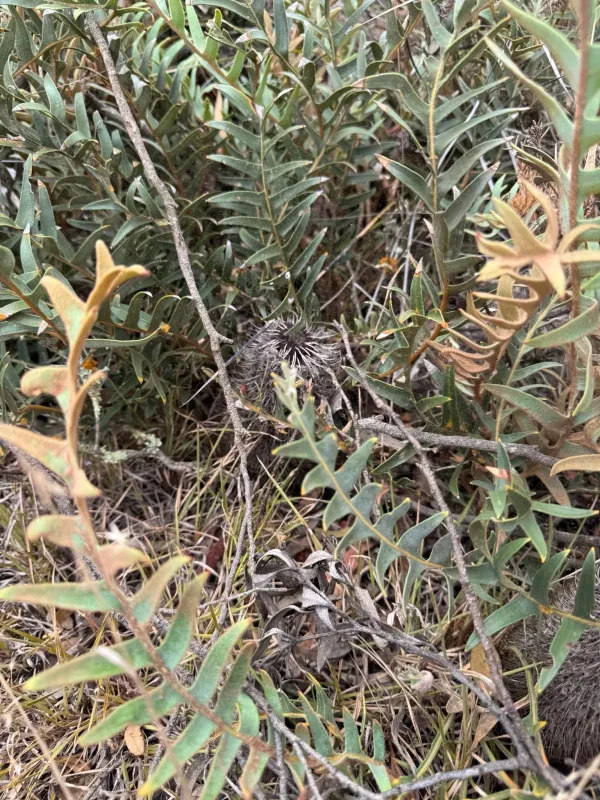
The blechnum-leaf banksia (Banksia blechnifolia) is a distinctive ground-hugging shrub belonging to the Proteaceae family. Native to the coastal plains of southwestern Australia, it is well-adapted to nutrient-poor, sandy soils.
The plant is defined by its fern-like, pinnate foliage and unique horizontal habit. It spreads across the ground, making it an excellent choice for stabilizing soil in suitable Mediterranean-like climates.
The primary agronomic requirement for this species is exceptional soil drainage. Like most members of the Proteaceae family, it cannot tolerate waterlogged conditions, which will quickly lead to root rot and death.
It thrives in full sunlight and prefers an open environment. While it is hardy against light frosts, it is not suited for areas with prolonged, severe freezing temperatures, often requiring greenhouse protection in cooler zones.
Regarding fertilization, growers must avoid traditional high-phosphorus commercial fertilizers. The roots have specialized proteoid hairs that are extremely sensitive to phosphorus toxicity, leading to rapid plant decline.
Main diseases and pests
The most devastating threat to Banksia blechnifolia is Phytophthora cinnamomi, a soil-borne water mold. This pathogen causes root rot, which is often fatal and difficult to control once established in a planting site.
Poor ventilation combined with high humidity creates conditions favorable for foliar diseases, including powdery mildew, which can significantly damage the plant's aesthetic and photosynthetic capabilities.
In terms of pests, scale insects and mealybugs are the most common concerns. These sap-sucking insects settle on stems and leaf undersides, weakening the plant and encouraging the growth of sooty mold.
Root-knot nematodes can also pose a serious risk, particularly in warmer climates. They disrupt the root system's ability to absorb water and nutrients, leading to stunted growth and yellowing of the foliage.
Integrated Pest Management (IPM) strategies, including maintaining good hygiene, ensuring optimal airflow, and using targeted biological or chemical controls only when necessary, are essential for successful cultivation.