
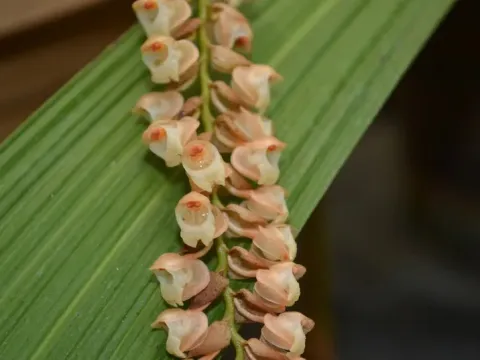
Pholidota
Pholidota
The genus Pholidota belongs to the Orchidaceae family. These plants are perennial herbs that typically grow as epiphytes in tropical forest canopies or as lithophytes on rocky substrates in humid environments.
What the section contains


Pholidota
Native to tropical and subtropical regions of Asia, the genus is widely distributed across countries like India, China, and Indonesia. Their natural habitat is characterized by high humidity and consistent rainfall patterns.
Botanically, Pholidota is distinguished by pseudobulbs that develop on creeping rhizomes. The leaves are usually coriaceous, providing the plant with the necessary structural integrity to withstand tropical wind and moisture.
Cultivation requires filtered light conditions. Excessive exposure to direct sunlight must be avoided to prevent thermal damage to the foliage, which is sensitive to high-intensity ultraviolet radiation.
An ideal potting medium consists of high-quality fir bark mixed with perlite or charcoal to ensure drainage. This allows the roots to access both moisture and oxygen, preventing the onset of rot in the root zone.
The most significant threat to Pholidota health is root rot caused by stagnant moisture. Inadequate airflow around the potting medium and prolonged waterlogging can lead to the rapid decay of the rhizome system.
Spider mites are a persistent concern in drier environments. These pests thrive when humidity levels drop, causing leaf discoloration and gradual tissue death if left unmanaged by the gardener.
Scale insects and mealybugs are common pests that colonize the base of the pseudobulbs. These insects sap the plant's vitality and create entry points for secondary fungal and bacterial infections.
Management of these pests involves the use of systemic insecticides or mechanical removal for minor infestations. It is essential to treat the affected areas thoroughly while ensuring the safety of the plant.
Regular observation and maintenance of proper sanitation are crucial for keeping the collection disease-free. A well-ventilated space with balanced moisture levels is the best defense against common orchid pests.