
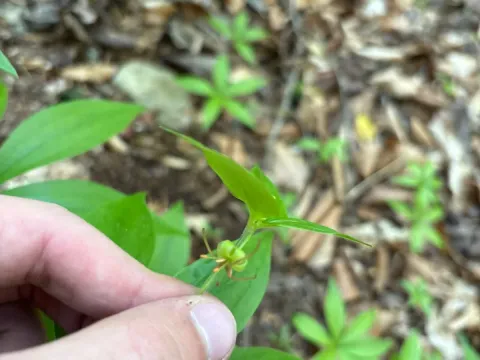
Medeola
Medeola
Sowing seeds of Medeola virginiana is best done in autumn, either directly into open ground or into specialized containers. The seeds require a long period of cold stratification to simulate the natural conditions of the forest floor.
What the section contains

Medeola
Spring sowing often results in poor germination rates, as the seeds need a mandatory dormant period in cold temperatures. It is recommended to use a substrate consisting of leaf mold and peat, closely mimicking the natural forest soil environment.
Seeds should be sown at a shallow depth, no more than 1–2 centimeters, to ensure they have enough energy to emerge. Seedlings must be shielded from direct sunlight, as they are extremely sensitive to heat and soil dehydration.
In nature, the plant propagates slowly, so providing consistent moisture in the substrate is crucial during cultivation. Germination may not occur until the year following sowing, requiring patience from the grower.
Aside from seed propagation, Medeola produces small tuberous rhizomes. Vegetative division is possible during the plant's dormant phase, though this must be done carefully due to the fragile nature of the subterranean organs.
Medeola is a member of the Lily family and thrives in the conditions of moist, deciduous forests. For successful development, the plant requires acidic, rich soil with a high content of organic matter and humus.
The culture is shade-tolerant and should be placed in areas with dappled light or under the dense canopy of trees. Direct summer sunlight is detrimental, causing leaf scorch and premature senescence of the aerial parts.
Climatic requirements include a moderately cool summer and sufficient rainfall throughout the spring and autumn months. The plant does not tolerate waterlogging, so effective drainage is essential for the planting site.
Medeola exhibits high winter hardiness, as it is adapted to the harsh climates of North America. During snowless winters, mulching with leaf litter is recommended to protect the shallow-growing rhizomes.
Cultivation practices focus on maintaining constant soil moisture and minimizing disruption to the soil structure. Synthetic mineral fertilizers are generally discouraged; annual applications of leaf compost are preferred.
The primary threats to Medeola are rots caused by soil over-saturation or moisture accumulation around the rhizomes. Infections frequently strike in conditions of poor air circulation within overly dense plantings.
Pests, such as slugs and snails, pose a significant risk to the young leaves of the plant. They are capable of destroying a large portion of the vegetative mass during the early spring growth period.
Phytophagous insects rarely cause critical damage to mature plants, although soil-borne nematodes can occasionally compromise the root system. Prevention involves maintaining site hygiene and removing decaying plant debris.
Damage to rhizomes by rodents during the winter is another common issue. Installing protective wire mesh or limiting pest access helps preserve the population in a garden setting.
Viral diseases are extremely rare but may manifest as leaf deformation. If infected specimens are discovered, they should be removed immediately along with the surrounding root ball to prevent the spread of the pathogen.