
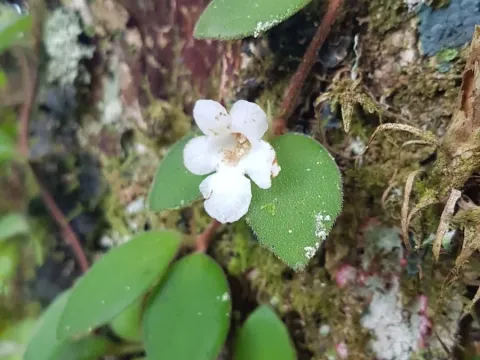
Codonanthe devosiana
Codonanthe devosiana
Codonanthe devosiana is a distinctive species within the Gesneriaceae family, native to the tropical rainforests of South America. It typically grows as an epiphyte, colonizing tree bark and humid rock crevices.
What the section contains
Codonanthe devosiana
Optimal cultivation requires stable temperatures between 20°C and 25°C. The plant is highly sensitive to cold drafts, which can cause leaf drop and stunted development, especially in the winter season.
The preferred substrate for this culture should mimic natural epiphytic conditions. A loose mix composed of high-quality peat, orchid bark, charcoal, and perlite is essential for ensuring proper root aeration.
Lighting should be bright but filtered. Direct sunlight causes severe damage to the foliage, resulting in necrotic spots. A location with soft, diffuse light is ideal to maintain the lush green appearance of the leaves.
Humidity management is a cornerstone of success for this species. Maintaining a constant humidity level of at least 60-70% is necessary to prevent the leaves from drying out and to encourage healthy floral development.
Root rot is the most common pathology associated with improper moisture management. It is primarily caused by water stagnation in the root zone, which facilitates the rapid spread of fungal pathogens throughout the plant.
Mealybugs represent a significant pest threat. They tend to settle in leaf axils and crevices, feeding on plant sap and weakening the overall vigor of the crop, often leading to secondary fungal issues.
Scale insects can also infest the stems and leaves of the plant. Because of their hard protective covering, they are often difficult to detect and require targeted mechanical removal or systemic insecticide treatments.
Spider mites are common in low-humidity environments, particularly during dry seasons. They suck cell contents, causing the foliage to lose its vibrant color and eventually leading to premature leaf senescence.
Integrated pest management involves regular monitoring, ensuring optimal humidity levels, and prompt application of appropriate acaricides or insecticides to mitigate infestations before they become critical.