
Codonanthe crassifolia
Codonanthe crassifolia
Description
Growing requirements
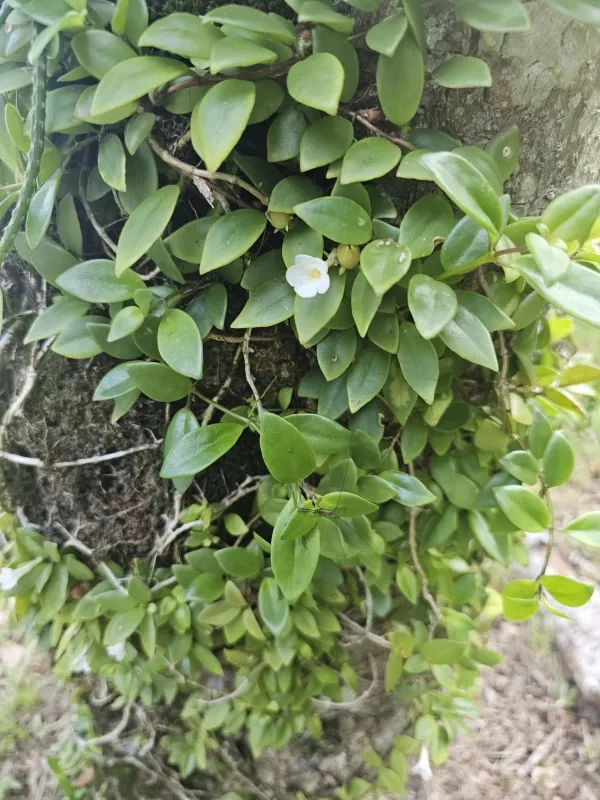
Codonanthe crassifolia is a species of flowering plant belonging to the Gesneriaceae family. Originating from the tropical rainforests of Central and South America, it primarily exists as an epiphyte, growing on the surfaces of trees or in mossy crevices.
Botanically, this plant is defined by its succulent, dark green leaves which allow it to tolerate periods of moisture scarcity. It produces delicate, often fragrant white flowers, which are highly valued in horticultural practices for their aesthetic appeal.
Successful cultivation requires a climate that mimics its natural habitat: bright, indirect sunlight is essential. Temperatures should consistently range between 20°C and 25°C, as the plant does not tolerate cold drafts or sudden temperature shifts.
The substrate must be well-draining, mimicking an epiphytic environment. A mix containing peat moss, pine bark, and perlite is ideal, ensuring that the root system has sufficient aeration and is not suffocated by heavy, water-retaining soils.
Watering must be approached with caution; while the plant enjoys moisture, it is highly susceptible to root rot. It is best to allow the top inch of the growing medium to dry out completely before providing supplemental irrigation.
Main diseases and pests
Common pests affecting Codonanthe crassifolia include spider mites and mealybugs, especially in indoor environments with low humidity. Regular leaf cleaning and moisture regulation are effective preventive measures against these infestations.
Root and stem rot remain the most significant threats to the health of the plant. These conditions are almost exclusively linked to poor drainage or overwatering, necessitating the use of fungicides and immediate repotting into fresh, sterile substrate if symptoms appear.