
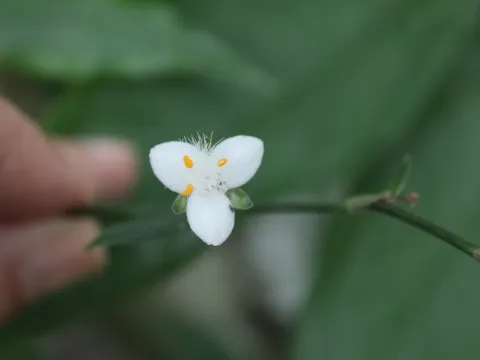
Tripogandra
Tripogandra
Tripogandra is a genus of herbaceous perennial plants belonging to the Commelinaceae family. Native to tropical and subtropical regions of the Americas, these plants naturally thrive in damp forest understories and highland environments where high humidity is consistent throughout the year.
What the section contains


Tripogandra
Botanically, Tripogandra species are known for their succulent-like stems that often trail or creep, making them excellent candidates for decorative containers. The leaves are generally lance-shaped or elliptical, arranged alternately along the stems, and provide a lush, green appearance.
For successful cultivation, Tripogandra requires bright, indirect light to maintain its vibrant color and compact growth habit. Direct exposure to intense sunlight should be strictly avoided as it can cause foliar scorch and permanent damage to the delicate leaf tissue.
The ideal growing medium is a porous, well-draining soil mix rich in organic matter. A combination of peat moss, pine bark, and perlite ensures that moisture is retained without causing waterlogging, which is essential for the health of the plant's fibrous root system.
Economically and horticulturally, Tripogandra is primarily utilized in the nursery trade as an ornamental foliage plant. It is frequently featured in hanging baskets or as a groundcover in shaded greenhouse settings, valued for its rapid growth and relative ease of propagation.
The most significant threat to Tripogandra health is the over-accumulation of water in the substrate, which facilitates root and stem rot. Proper drainage management is critical, as stagnant water quickly leads to the decay of the lower nodes and subsequent plant collapse.
Common pests include spider mites, which thrive in environments with low relative humidity. These pests feed on the cell sap, causing yellowing and a mottled appearance on the leaves, ultimately leading to significant structural damage if left untreated.
Managing diseases requires a proactive approach centered on air circulation and controlled watering frequency. Keeping the plant in a space with adequate ventilation helps prevent fungal outbreaks and reduces the risk of botrytis or other opportunistic pathogens.
When infestation occurs, the use of mild horticultural oils or specialized acaricides is recommended. Regular inspection of the leaf undersides is essential for early detection, allowing the gardener to act before a population of pests becomes established.
Cultural maintenance, such as timely pruning, not only keeps the plant aesthetic but also helps remove dead or decaying tissue that could act as a reservoir for disease. Keeping the growing area clean is a fundamental step in integrated pest management for this species.