
Zebrina
Zebrina
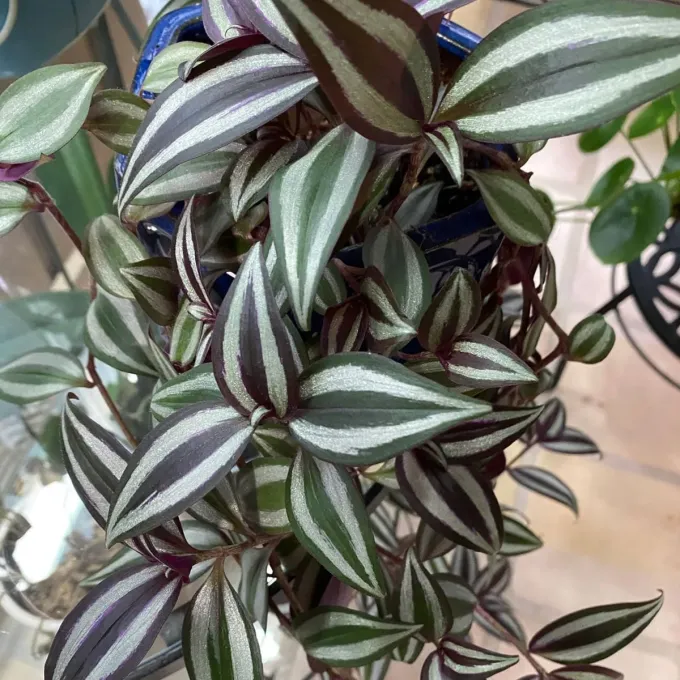
Description
Growing requirements
Zebrina (Tradescantia zebrina) is a herbaceous perennial plant belonging to the Commelinaceae family. Native to tropical regions of Mexico and Central America, it is widely recognized for its trailing growth habit and distinctive foliage coloration.
Botanically, the plant features succulent, branched stems and ovate leaves with silver and purple longitudinal stripes. The underside of the leaf often exhibits a vibrant magenta or deep purple color, which is a key trait of the species.
The plant requires bright, indirect light to maintain its color intensity. While it can tolerate partial shade, insufficient light levels often cause the stems to become leggy and the leaf variegation to fade significantly.
Optimal growth is achieved in well-draining, peat-based potting mixes. The soil should remain consistently moist but not waterlogged, as the roots are highly susceptible to rot if allowed to stand in saturated conditions for extended periods.
Temperature management is vital, with a preferred range of 20°C to 25°C. Exposure to temperatures below 10°C should be avoided to prevent cold stress, which can lead to leaf drop and stunted growth.
Main diseases and pests
The most common pests affecting Zebrina are spider mites, which thrive in low-humidity environments. These mites feed on the sap, causing small yellow spots on the leaves and fine webbing, eventually leading to foliage desiccation.
Mealybugs and scale insects may also infest the plant, particularly at the leaf axils and along the stems. Regular inspection and cleaning of the leaves can help detect these infestations before they spread to other plants.
Root rot and stem rot are the primary fungal threats, usually associated with overwatering or poor drainage. Infected plants show mushy, discolored stems and wilting despite damp soil conditions.
Fungal leaf spot diseases may occasionally occur if the foliage is kept excessively wet, especially in environments with poor air circulation. It is recommended to water at the base of the plant to keep the leaves dry.
Effective management strategies include cultural control, such as maintaining proper spacing and humidity, and the application of suitable horticultural oils or systemic insecticides when biological control methods are insufficient.