
Tradescantia sillamontana
Tradescantia sillamontana
Description
Sowing dates
Propagation of Tradescantia sillamontana is most effectively achieved through stem cuttings. The best period for collecting cuttings is during the active growth phase in late spring or summer.
Cuttings should be 7–10 centimeters in length and will readily develop roots in both water and well-draining soil media. Rooting generally takes approximately two weeks under warm, stable conditions.
Seed propagation is also possible, although it is less common for commercial purposes. Seeds should be sown in a light, sandy substrate and kept consistently moist until germination occurs.
Once seedlings develop true leaves, they should be transplanted into individual pots. Providing adequate airflow at this stage is crucial to prevent damping-off diseases.
For decorative landscaping, planting density is usually set at 5–7 specimens per square meter to ensure a lush, uniform carpet effect within a short period.
Growing requirements
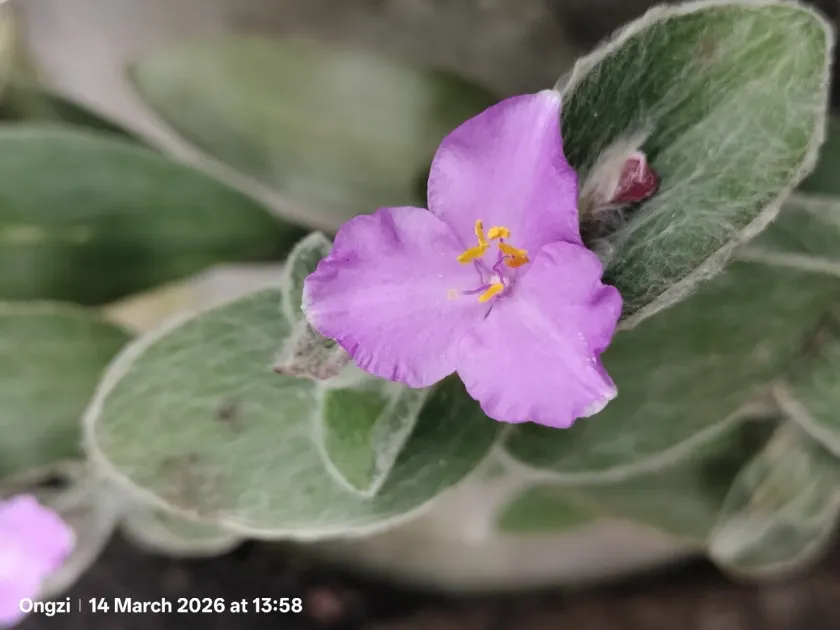
Tradescantia sillamontana is a succulent perennial member of the Commelinaceae family, native to the arid mountains of northern Mexico. Its unique morphology features dense white hairs covering leaves and stems.
The plant requires bright, direct or filtered sunlight to maintain its signature silvery appearance and compact structure. Insufficient light leads to etiolation and loss of hair density.
The ideal growing medium must be highly porous. A mixture of potting soil, coarse sand, and perlite is recommended to prevent water stagnation, which the plant is highly sensitive to.
Growth is optimal within a temperature range of 20–25 degrees Celsius. During the winter dormancy period, the plant thrives in cooler conditions, between 12 and 15 degrees Celsius.
Watering should be sparse and conducted only when the soil has completely dried out. The plant's drought tolerance allows it to withstand periods of low humidity without adverse effects.
Main diseases and pests
Overwatering is the primary cause of plant failure, leading to rapid root rot. Ensuring that pots have drainage holes and that the substrate is well-aerated is essential for survival.
Common pests include mealybugs and spider mites, which can easily hide within the dense pubescence of the foliage. Regular inspection is necessary to catch infestations early.
If pests are identified, contact or systemic insecticides should be applied carefully. It is important to avoid spraying too frequently to prevent damage to the delicate leaf hairs.
Leggy stems are a common sign of insufficient light. This can be corrected by pruning the elongated branches, which encourages new, bushy growth from the base of the plant.
Maintaining a clean environment and avoiding getting water on the leaves during irrigation helps prevent fungal infections and keeps the foliage looking pristine.