
Stenochlaena tenuifolia
Stenochlaena tenuifolia
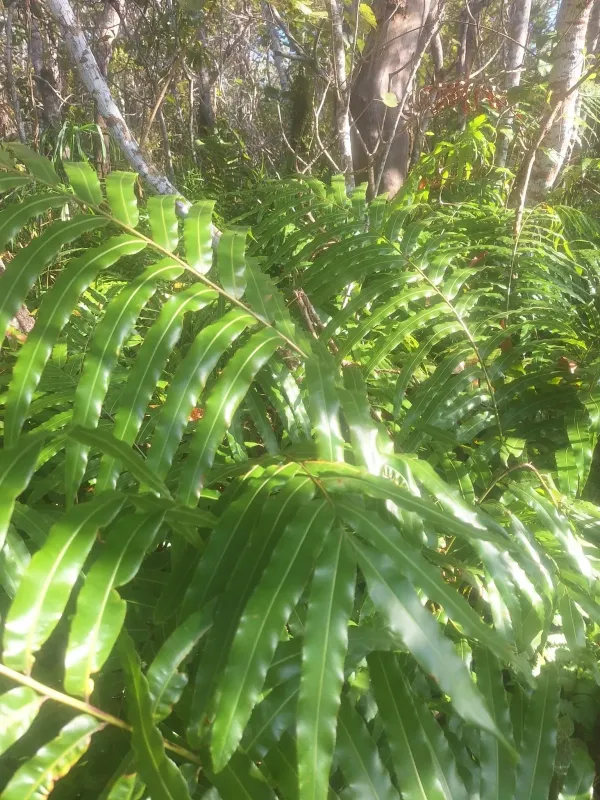
Description
Growing requirements
Stenochlaena tenuifolia is a perennial, evergreen climbing fern belonging to the Blechnaceae family. This species is unique for its vining habit, allowing it to colonize tree trunks and vertical surfaces in its native tropical and subtropical habitats.
The plant is native to African tropical regions and various islands in the Indian Ocean. It thrives in high-humidity environments such as riverine forests, coastal areas, and swamps, where rainfall is abundant and the atmospheric moisture remains consistently high.
Agricultural success depends on maintaining stable thermal conditions, preferably above 15 degrees Celsius. The species requires soil that is rich in organic matter and highly permeable to ensure roots remain moist but not waterlogged, which is crucial for preventing root rot.
Regarding light, the plant prefers filtered or indirect sunlight. Direct exposure to intense tropical sun can damage the foliage, leading to yellowing or necrosis. Optimal shading techniques are often implemented in commercial greenhouses to mimic the canopy environment.
Maintenance involves frequent irrigation and periodic fertilization with balanced nitrogen-rich compounds to sustain the rapid production of new fronds. Proper aeration is also necessary to prevent fungal outbreaks in humid growing areas.
Harvesting
The primary agricultural interest in Stenochlaena tenuifolia is its use as an edible vegetable. Young, tender fronds and emerging shoots are harvested for local culinary markets, often prepared as a traditional leafy green.
Harvesting techniques require precise manual labor to select only the most immature, curled fronds, which are the most palatable. Frequent harvesting actually benefits the plant, as it stimulates the development of lateral shoots and denser growth.
Post-harvest handling is critical because the shoots are highly perishable. They should be kept in cool, moist conditions until they reach the consumer to maintain their nutritional profile and crunchy texture, which is a signature quality of this species.
In addition to culinary applications, the plant possesses documented ethnobotanical value. Local communities utilize extracts from the leaves for medicinal purposes, particularly in the treatment of dermatological issues and inflammation.
Commercial cultivation is expanding as the demand for diverse, nutrient-dense leafy greens grows. Future prospects include better selection of high-yield varieties that can withstand varied soil conditions while maintaining the delicate flavor profile required for the food industry.