
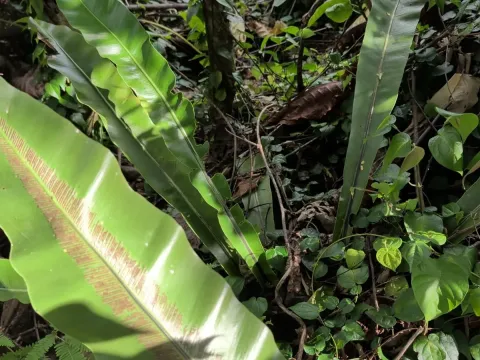
Bird's-nest fern
Asplenium nidus L.
The Bird's-nest fern (Asplenium nidus L.) is an epiphytic species within the Aspleniaceae family, widely cultivated for the ornamental plant market. Its distinct rosette structure and bright green fronds make it a highly valued commercial crop in greenhouse production.
What the section contains
Bird's-nest fern
Optimal growth is achieved at temperatures ranging from 20 to 25 degrees Celsius. As a tropical native, this fern requires consistent warmth and protection from cold drafts, which can cause severe physiological stress and growth arrest.
High relative humidity, ideally between 70% and 80%, is essential for sustaining the health of the foliage. Growers must employ misting systems or controlled irrigation to ensure that the environment remains consistently humid, especially in temperate regions.
The planting substrate should be specifically designed to provide excellent aeration and moisture retention. A mix consisting of peat moss, pine bark, and perlite or sphagnum is recommended to prevent soil compaction and root suffocation.
Light management is crucial, as Asplenium nidus is shade-tolerant but requires bright, indirect light. Excessive sun exposure causes the fronds to bleach or develop necrotic lesions, drastically reducing the commercial value of the crop.
Scale insects are a primary pest in fern production, clinging to the underside of fronds and petioles. Their feeding activity depletes plant vigor and produces honeydew, which often leads to secondary sooty mold growth.
Mealybugs are another common threat, congregating in the dense center of the rosette where they are difficult to reach. Their presence causes stunted growth and distorted, yellowing foliage throughout the plant crown.
Root rot, often caused by overwatering or poorly draining substrates, is the most frequent pathological issue in greenhouse environments. Water-logged roots become susceptible to fungi, leading to quick plant collapse if not treated immediately.
Fungal leaf spots can occur when the foliage remains wet for extended periods in stagnant air. Ensuring adequate ventilation and avoiding overhead irrigation late in the day helps minimize the risk of infection.
Integrated pest management protocols, including early detection and the use of targeted biological controls, are highly recommended to ensure a clean and healthy crop ready for market distribution.