
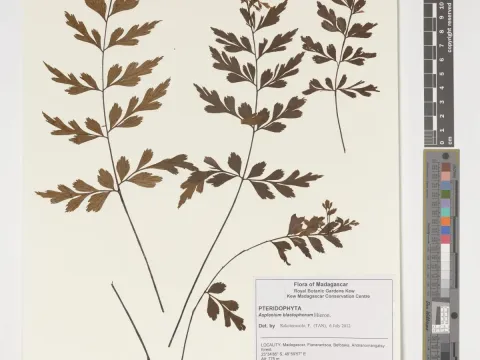
Asplenium blastophorum
Asplenium blastophorum
Asplenium blastophorum is a distinct species of fern within the Aspleniaceae family. It is native to tropical rainforest regions, particularly those found in parts of Australia, where it thrives in high-humidity environments.
What the section contains
Asplenium blastophorum
The plant requires a stable climatic environment to maintain its ornamental value. Optimal growing temperatures range from 18 to 24 degrees Celsius. It is sensitive to extreme fluctuations and does not tolerate frost or cold drafts.
Soil requirements for this species are specific: it needs a well-draining, loose, and slightly acidic medium. A mixture of peat, perlite, and bark is often recommended to mimic the natural epiphytic conditions of its native habitat.
Asplenium blastophorum prefers bright, filtered light. Direct sunlight is highly detrimental to the fronds, often leading to leaf scorching and loss of turgor, hence the need for greenhouse shading or proper indoor placement.
High humidity levels are essential for the healthy development of this fern. Consistent ambient moisture, preferably above 65 percent, is necessary to support the plant's metabolic processes and prevent the drying of delicate leaf tips.
As an ornamental crop, its primary value lies in its aesthetic appearance and its unique biological trait of producing plantlets directly on the fronds. This allows for efficient asexual propagation in professional nursery settings.
Common pests include scale insects and spider mites, which typically target the plant when ambient humidity drops. Integrated pest management using insecticidal soaps is often effective for control.
Root pathogens, such as Pythium or Phytophthora, are major threats usually triggered by overwatering. Ensuring excellent drainage and avoiding water stagnation is the most critical preventive measure for crop health.