
Hen and chicken fern
Asplenium bulbiferum G. Forst.
Description
Sowing dates
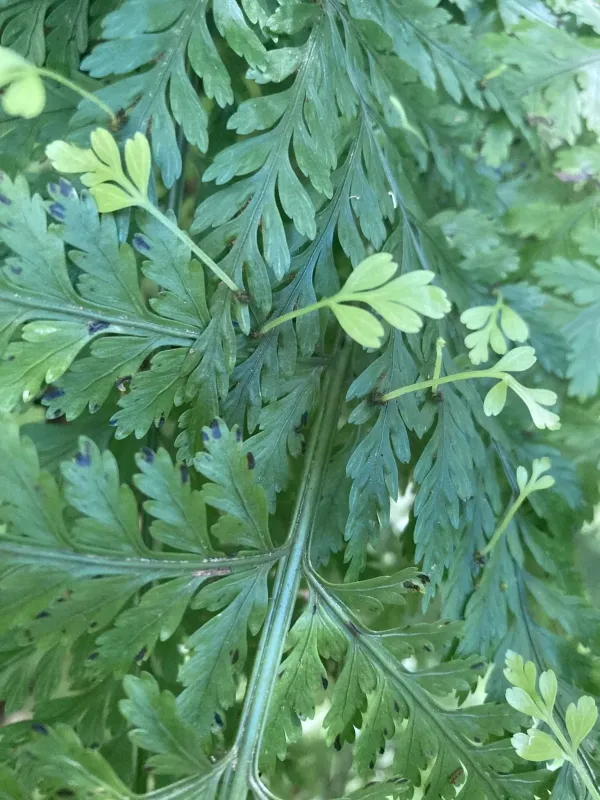
Asplenium bulbiferum, commonly known as the Hen and chicken fern, is a species of fern in the family Aspleniaceae. It is unique for its method of asexual reproduction where bulbils form on the fronds.
In agricultural and nursery practice, propagation is achieved by carefully removing these bulbils once they develop sufficient roots and transplanting them into small containers.
This process is best performed during the spring season when the plant initiates new growth, ensuring higher success rates for the young fernlets.
While spore propagation is possible, it is commercially impractical due to the slow growth rate of the gametophytes and the high risk of contamination in uncontrolled environments.
Cultivators must ensure that the growing medium is well-moistened during the initial establishment phase to prevent the desiccation of the delicate root systems.
Growing requirements
Native to the temperate forests of New Zealand, this plant requires high humidity levels and stable environmental conditions to reach its full development potential.
The optimal temperature range is between 18°C and 22°C. The fern is susceptible to thermal stress if temperatures drop significantly or if the air becomes too stagnant.
The growing substrate should be porous and rich in organic matter. A mixture of peat moss, perlite, and bark is ideal for providing the necessary drainage and aeration.
Lighting should be bright but indirect. Exposure to direct sunlight will cause the fronds to scorch and fade, significantly impacting the aesthetic quality of the crop.
Water quality is critical; the use of distilled or rainwater is recommended, as the fern is sensitive to chlorine and mineral salts found in tap water.
Main diseases and pests
The Hen and chicken fern is frequently targeted by soft-bodied pests such as aphids and scale insects, which can severely weaken the plant by feeding on its sap.
Root rot caused by Phytophthora or Pythium species is a major threat, particularly when drainage systems fail or over-watering occurs in low-light conditions.
Management strategies involve integrated pest management (IPM), including the use of insecticidal soaps and biological controls to minimize chemical residues.
Regular sanitation of the nursery environment is essential to prevent the spread of fungal spores and pests between batches of ferns.
Visual monitoring is the first line of defense, allowing growers to isolate affected plants before an infestation spreads across the entire production area.