
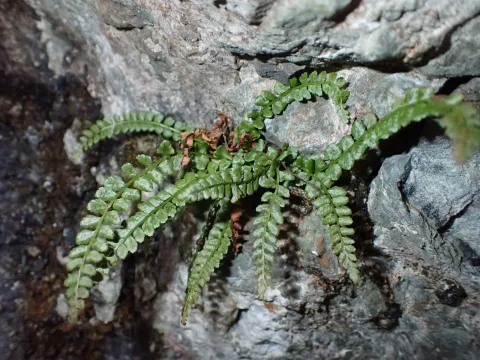
Green spleenwort
Asplenium viride
Green spleenwort (Asplenium viride) is a perennial fern species within the Aspleniaceae family. It is naturally adapted to rocky crevices and mountain slopes, which dictates its unique physiological requirements when grown in a managed or garden environment.
What the section contains
Green spleenwort
The plant thrives in cool, humid environments with indirect or filtered light. It is sensitive to direct sunlight, which can quickly dehydrate its delicate fronds, so it requires a location that mimics the shaded conditions of a cliff ledge or forest understory.
Cultivation success relies heavily on the quality of the growing medium. A well-draining, porous substrate is essential, preferably with a high mineral content and a neutral to slightly alkaline pH. This prevents the moisture retention that often leads to root death.
Temperature management is a key aspect of growing Asplenium viride. It does not tolerate high heat well and prefers cool temperatures between 15 and 20 degrees Celsius. Providing a cool winter dormancy period is beneficial for the long-term health and growth vigor of the plant.
Watering requires precision: the substrate should be kept consistently moist but never waterlogged. Using soft, dechlorinated water helps prevent the accumulation of minerals that can be detrimental to the health of the fern's root system over time.
Fungal diseases are the most significant threats to Green spleenwort, usually triggered by poor ventilation and excessive moisture. Root rot is a common symptom of incorrect watering practices, often leading to rapid decline if not addressed.
Pests such as scale insects and mealybugs frequently target this species. They hide in the tight spaces between fronds, making them difficult to detect until the plant starts showing signs of stunted growth or yellowing.
Spider mites are another concern, particularly in indoor environments with low humidity levels. Regular misting and maintaining optimal humidity can act as a deterrent to these tiny arachnids, preventing them from colonizing the fronds.
If chemical interventions are necessary, one must use products specifically formulated for delicate ferns. Many standard pesticides can be phytotoxic, so testing on a small portion of the plant is recommended before full application.
Cultural control, such as maintaining cleanliness and proper spacing, is the first line of defense. By ensuring the plant is not overly crowded and has adequate airflow, the risk of disease and infestation is significantly minimized.